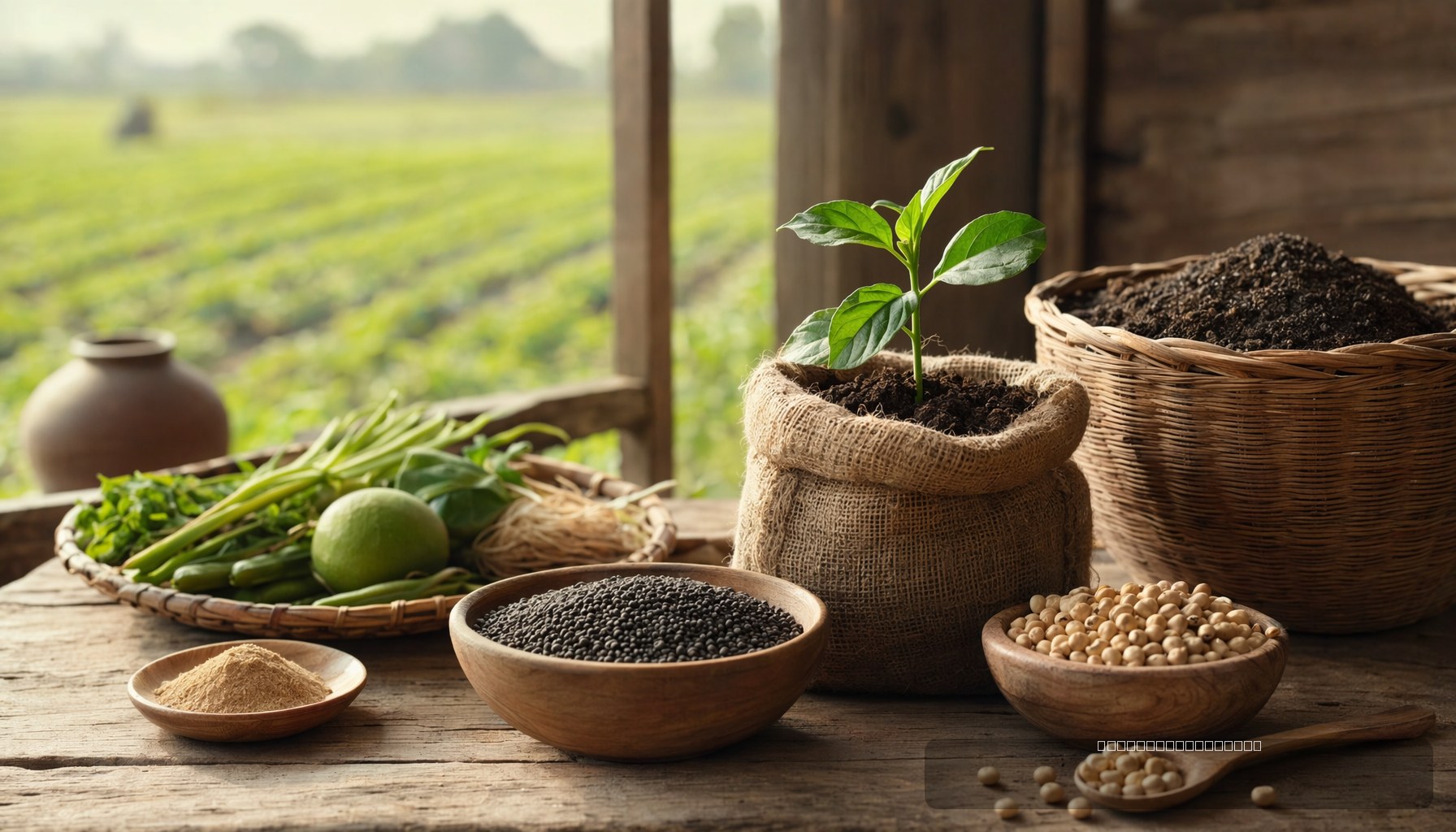
Adani's Harit Amrit organic fertilizer sold 4,575+ tonnes in FY26, more than double the prior year, as the brand expands across three Indian states via a waste-to-energy model.
Harit Amrit is an organic fertilizer brand launched in FY25 by Adani TotalEnergies Biomass Ltd (ATBL), a wholly owned subsidiary of Adani Total Gas Ltd, and it sold over 4,575 tonnes across Uttar Pradesh, Madhya Pradesh, and Gujarat in FY26, more than double the 2,000-plus tonnes recorded in its first year.
ATBL is not a standalone agri startup. It sits inside the Adani Group conglomerate, better known for ports, airports, and power infrastructure. The fertilizer business grew out of ATBL's compressed biogas (CBG) operations, where agricultural residue, cattle dung, and municipal solid waste are processed through anaerobic digestion. The gas produced is sold as CBG; the leftover digestate becomes the raw material for Harit Amrit. CBG sales themselves rose from 730 tonnes in FY25 to 1,654 tonnes in FY26, according to ATBL's FY26 annual report, showing both output streams scaling together.
What changed in FY26
The numbers in ATBL's annual report tell a straightforward story: a brand that barely existed two years ago now has multi-state distribution and a production base that is still ramping up.
The anchor facility is the Barsana project in Uttar Pradesh, described by the company as India's largest agri-waste-based CBG plant under development. Phase one is operational and currently processes around 115 tonnes of agricultural waste and cattle dung per day, with peak CBG output of 7.5 tonnes per day. ATBL expects that figure to reach around 11 tonnes per day in FY27 as operations stabilise. At full commissioning, the plant will process 600 tonnes of feedstock daily, producing more than 42 tonnes of CBG and 217 tonnes of organic fertilizer every day. The total project cost is over Rs 200 crore.
Beyond Barsana, ATBL has secured municipal solid waste-to-CBG projects in Ahmedabad and Rajkot, with a combined feedstock processing capacity of 750 tonnes per day. This extends the same anaerobic digestion model from farm waste to urban waste streams. The company also commissioned its first dealer-owned dealer-operated CBG dispensing station in FY26, giving it a retail outlet for the biogas side of the business.
The expansion fits within the central government's SATAT (Sustainable Alternative Towards Affordable Transportation) programme, which targets 5 per cent CBG blending in transport fuel. ATBL is also exploring carbon credit registration under the Verra Verified Carbon Standard and the Gold Standard for the Global Goals, though no credits have been publicly confirmed yet.
What buyers and farmers should know
For farmers and clean-input buyers, the Harit Amrit brand warrants a few practical questions before purchase.
Organic fertilizers in India are regulated under the Fertiliser (Control) Order, 1985, and must carry an FCO-compliant label showing nutrient content, source material, and batch details. ATBL has not published a public product specification sheet for Harit Amrit at the time of writing, so buyers should ask distributors for the FCO registration number and the guaranteed analysis (nitrogen, phosphorus, potassium percentages, and organic carbon content) before ordering.
The source material matters too. Harit Amrit is derived from anaerobic digestate, which is the slurry remaining after biogas production from agricultural residue and cattle dung. Digestate-based fertilizers can be high in available nitrogen and micronutrients, but quality depends heavily on feedstock consistency and processing controls. As ATBL moves toward incorporating municipal solid waste at its Ahmedabad and Rajkot plants, the feedstock mix will change, and with it the potential for contaminants like heavy metals. Farmers buying Harit Amrit from future batches tied to urban waste streams should request third-party test certificates.
For consumers who care about what goes into the soil that grows their food, the brand's growth is worth tracking. India's organic food market depends on a credible supply of certified organic inputs at the farm level. A large industrial player entering this space can lower input costs and improve availability, but scale alone does not guarantee quality. The FCO framework does not require independent third-party audits at the frequency that organic certification bodies like APEDA's National Programme for Organic Production (NPOP) demand.
If you buy produce marketed as organically grown and your supplier sources from farms in western UP, MP, or Gujarat, it is worth asking whether their farm inputs are NPOP-certified or simply FCO-registered. The two are not the same. FCO registration confirms a product meets minimum nutrient standards; NPOP certification confirms the entire production chain, from input sourcing to field application, meets organic standards.
Adani's entry into organic fertilizers through a waste-to-energy byproduct is a genuinely different model from the synthetic fertilizer industry, and the circular logic of turning farm waste back into farm input has real merit. Whether Harit Amrit's quality holds as production scales from 4,575 tonnes to the projected hundreds of thousands of tonnes annually is the question that neither the annual report nor the current distribution footprint can answer yet.
Sources
- Beyond ports and power, Adani is now selling organic fertilizers to farmers — Hindu Business Line
- SATAT scheme for Compressed Bio-Gas — Ministry of Petroleum and Natural Gas, Government of India
- Fertiliser (Control) Order 1985 — Department of Agriculture and Farmers Welfare
- National Programme for Organic Production (NPOP) — APEDA