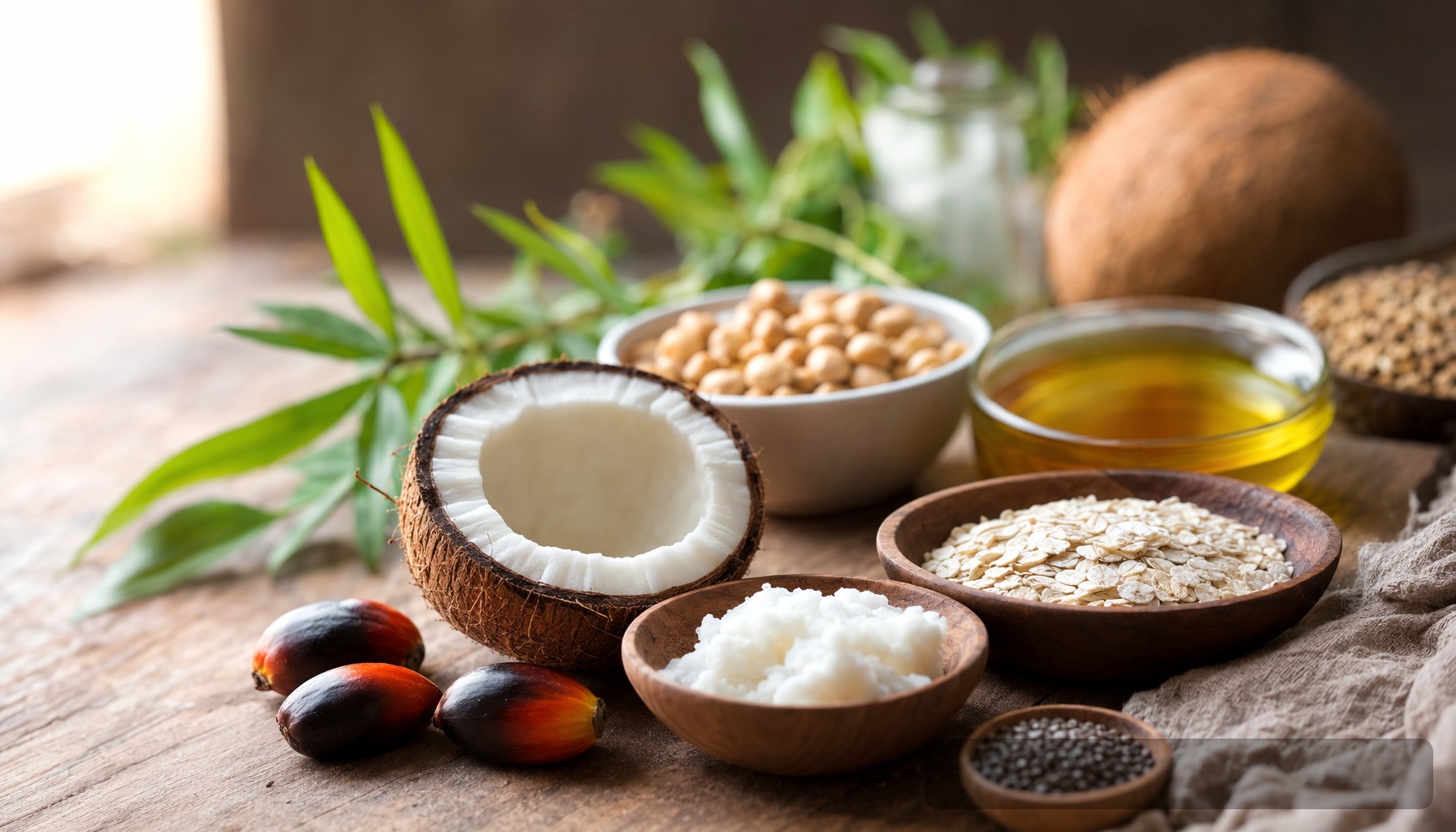
Palm oil is neither uniquely harmful nor uniquely green. The replacement oils often carry a larger land and biodiversity footprint, and the real dietary risk in most packaged foods is sugar, salt, and refined starch, not the fat source.
The 'No Palm Oil' label now appears on everything from biscuits to baby snacks, but the claim tells you only what an ingredient is not, not whether the product is healthier or more sustainable. Palm oil is an edible vegetable fat pressed from the fruit of the oil palm tree (Elaeis guineensis), with a fat profile that sits between highly saturated fats such as butter, ghee, and coconut oil, and more unsaturated oils such as sunflower, soybean, and mustard. That middle position is the starting point for any honest conversation about what 'palm-free' actually means.
Writing in Hindu Business Line on 26 July 2026, Sumit Roy, Assistant General Manager of the Palm Oil Programme at Solidaridad Asia, argues that the label is being used to shortcut a genuinely complex question. His piece draws on WHO guidance, peer-reviewed trials, and land-use data to make the case that palm oil's health and sustainability profile depends on how it is produced and used, not on its mere presence in a product.
What the science actually says
The standard criticism of palm oil is its saturated fat content, roughly 50 percent of total fat. That number sounds alarming in isolation, but context matters. Palm oil also contains oleic acid, a monounsaturated fat associated with reduced triglycerides and lower LDL (low-density lipoprotein) cholesterol. Oleic acid is the same fatty acid that makes olive oil widely recommended in clinical nutrition.
Controlled clinical trials conducted between 1992 and 2017 across Malaysia, Australia, India, China, Denmark, and Italy found that palm olein, the liquid fraction of palm oil, performed on par with olive, canola, and groundnut oils in terms of LDL cholesterol response, according to Roy's analysis. A 2021 paper in Sustainability by Robert Bayer and Tim Rademacher examined species richness and carbon footprints across edible oil crops and found that palm oil's high yield per hectare gives it a smaller biodiversity and climate footprint per litre than most alternatives.
The World Health Organization's recent rapid overview, cited by Roy, calls for evidence-based interpretation of palm oil rather than slogan-based conclusions. FSSAI has not issued a specific advisory on 'No Palm Oil' labelling claims, so there is currently no regulatory definition in India that governs what a brand must prove before printing the phrase on pack.
None of this means palm oil is without concern. Like any fat, it needs to be judged in the context of total diet, cooking method, and how often it appears. The more pressing issue in most packaged foods is not the oil at all. Sugar, salt, refined starch, and excess calories are the primary drivers of diet-related disease risk in ultra-processed products, and a 'No Palm Oil' biscuit can still carry all four in quantity.
What changed, and why it matters for Indian shoppers
The 'No Palm Oil' trend has accelerated in India over the past three to four years, driven partly by European consumer sentiment filtering through to domestic premium and D2C food brands. Brands in the snack, spread, and infant food categories have adopted the label as a differentiator, often without explaining what oil they use instead.
The replacement oils are where the sustainability argument gets complicated. Palm oil produces more oil per hectare than sunflower, soybean, rapeseed, or groundnut. Bayer and Rademacher's 2021 data show that the biodiversity footprint for most alternative edible oils is substantially larger than that of palm oil when measured per unit of oil produced. Palm oil is also the most water-efficient edible oil crop by the same metric. Shifting production to lower-yield alternatives does not make the oil disappear from the supply chain; it shifts the land, water, and emissions burden elsewhere, often to regions with weaker environmental protections.
For India specifically, the economics add another layer. Palm oil is one of the most affordable edible fats available to low-income households and small food businesses. India imports a large share of its edible oil, and palm oil accounts for a significant portion of that import basket. A broad consumer shift away from palm oil, driven by label claims rather than supply-chain reform, does not automatically produce a cleaner or more equitable food system.
What buyers and cooks should do
The first practical step is to read past the front-of-pack claim and check the ingredient list for the actual oil used. Common replacements for palm oil in packaged foods include sunflower oil, rice bran oil, and interesterified fats. Each has its own nutritional and environmental profile, and none is automatically superior.
If sustainability is the concern, look for products that carry a Roundtable on Sustainable Palm Oil (RSPO) certification rather than a blanket 'No Palm Oil' claim. RSPO certification addresses deforestation, peat drainage, and labour standards in the supply chain. A product using certified sustainable palm oil has a more defensible environmental claim than one that simply swaps in a lower-yield alternative with no traceability.
For home cooks, palm oil in traditional Indian cooking, particularly in some South Indian and tribal cuisines, has a long history. Cold-pressed or minimally processed versions retain more of the oil's natural tocotrienols (a form of vitamin E). Using any oil at high heat repeatedly degrades its fatty acid profile, so cooking method matters more than the oil's marketing label.
When a brand claims 'No Palm Oil', the question worth asking is: what oil did you use instead, where does it come from, and what does that supply chain look like? Until brands answer those questions on pack, the claim is a starting point for inquiry, not a conclusion.
Sources
- Look beyond the 'No Palm Oil' label — Hindu Business Line, Sumit Roy (July 2026)
- Species Richness and Carbon Footprints of Vegetable Oils: Can High Yields Outweigh Palm Oil's Environmental Impact? — Bayer & Rademacher, Sustainability, 2021
- Roundtable on Sustainable Palm Oil (RSPO) — certification standards and supply chain traceability
- WHO — Fats and fatty acids in human nutrition: report of an expert consultation