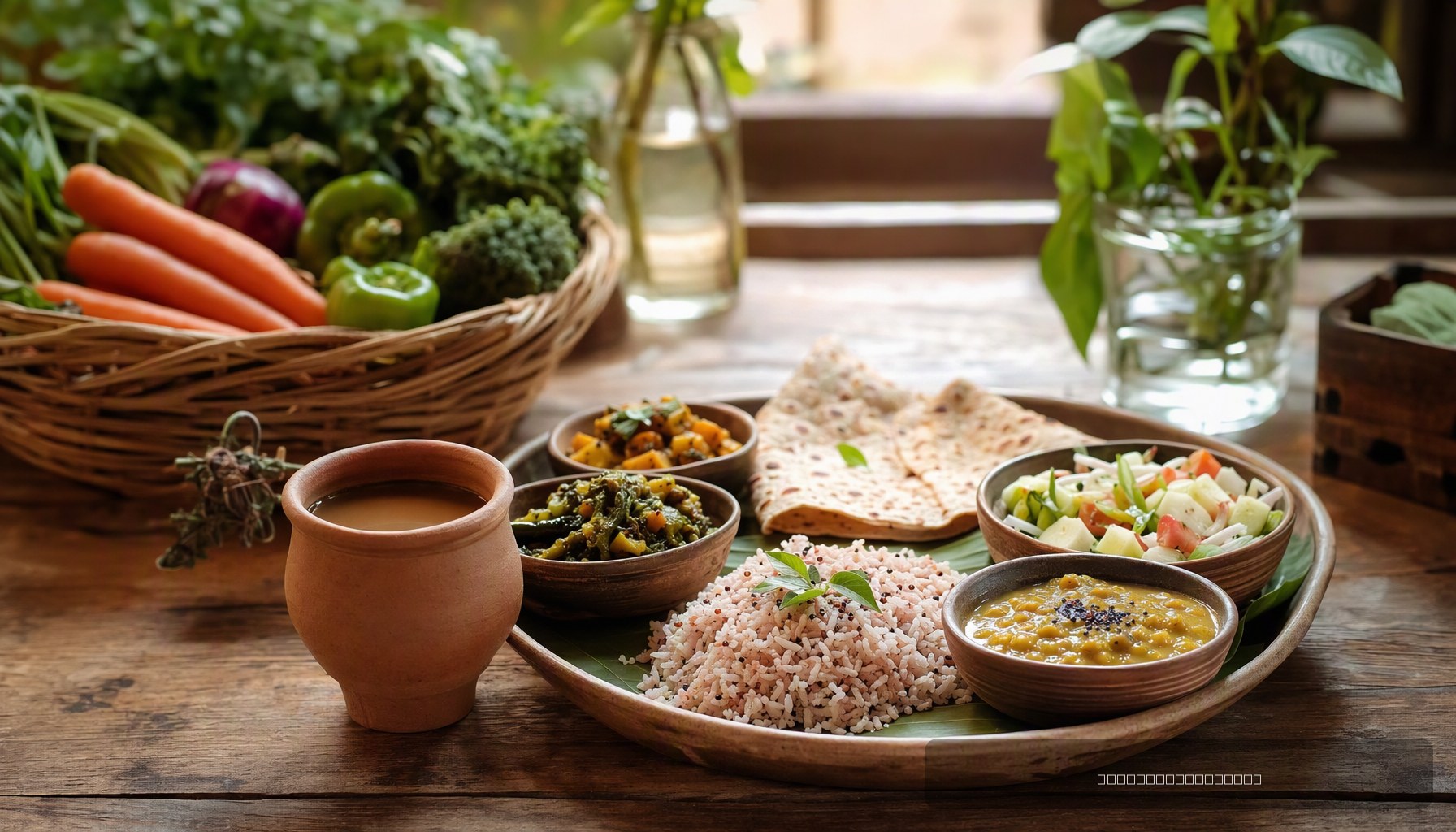
Bhopal's Kachra Cafe lets residents swap recyclable waste for meals using Kachra Coins, diverting 45-plus tonnes of material in eight months through a municipal partnership.
Kachra Cafe in Bhopal, Madhya Pradesh, is India's first food outlet where recyclable household waste, not money, buys your meal. Launched by homemaker-turned-activist Anjeeta Sabhlok through her NGO Mannat, in partnership with the Bhopal Municipal Corporation, the cafe converts old newspapers, plastic packets, cardboard, clothes, and electronic waste into a proprietary credit called Kachra Coins. According to Mint's reporting, the initiative has sent more than 45 tonnes of material for recycling in eight months of operation.
The five-W picture: Sabhlok, a Bhopal resident with years of waste-management education work behind her, founded the cafe after observing that awareness campaigns rarely change daily habits at scale. The cafe operates in Bhopal, the capital of Madhya Pradesh, a city that, like most Indian metros and tier-2 cities, struggles with mixed-waste disposal and low household segregation rates. The timing matters because India's Solid Waste Management Rules, 2016 legally require source segregation of waste into wet, dry, and hazardous streams, yet enforcement at the household level remains patchy. The cafe's model turns a legal obligation into a financial incentive.
What changed
Most municipal recycling programmes in India rely on informal waste-pickers or periodic drives. Neither creates a consistent, resident-driven habit. Kachra Cafe changes the transaction: instead of asking people to segregate waste as a civic duty, it pays them in food credits.
The mechanics are straightforward. A resident brings dry recyclables to the cafe's collection centre. Staff weigh the material and assign a credit value based on type and quantity. The cafe's website lists separate rates for different materials, acknowledging that a kilogram of cardboard and a kilogram of e-waste have different downstream market values. Credits accumulate as Kachra Coins and can be spent on food, beverages, and household essentials stocked at the cafe.
The 45-tonne figure reported by Mint is the clearest available measure of the model's traction. To put it in context, the Central Pollution Control Board estimates India generates roughly 62 million tonnes of municipal solid waste annually, with dry recyclables making up around 17 percent of that stream. A single neighbourhood-scale cafe diverting 45 tonnes in eight months is a small fraction of the city's total, but it demonstrates that a reward-based model can move material that would otherwise enter mixed landfill.
Sabhlok's stated ambition is replication. She wants other cities to adopt similar models, and the municipal partnership structure makes that plausible: the Bhopal Municipal Corporation provides institutional backing, which reduces the legal and logistical barriers that a purely private operator would face.
From a clean-label and food-ethics standpoint, the cafe sits at an unusual intersection. The food served is not the story here in the way that ingredients or additives would be for a conventional restaurant review. What matters is the sourcing logic: the cafe's entire supply chain for customers runs through a waste-exchange system, which means the people most likely to eat there are also the people most invested in reducing packaging waste. That is a different kind of clean-label commitment, one that starts before the food is even prepared.
What buyers and cooks should do
If you live in Bhopal, the practical step is to start separating dry recyclables at home before your next visit. Paper, plastic film, cardboard, old clothes, and small electronics are all accepted. The cafe's website lists current Kachra Coin rates by material type, so checking those rates before you pack a bag will tell you which items are worth bringing in bulk.
For residents in other cities, the model is worth tracking. The Bhopal Municipal Corporation partnership is the structural piece that makes this scalable. If your city's municipal body has a dry-waste collection centre or a material recovery facility, a similar cafe model could attach to that infrastructure. Residents who want to push for something comparable can point to Bhopal's 45-tonne result as a concrete benchmark when approaching local ward offices or resident welfare associations.
For anyone running a zero-waste or sustainability-focused food business, Kachra Cafe's Kachra Coin system is a working example of a non-monetary loyalty programme tied to environmental behaviour. The cafe does not appear to have published a detailed breakdown of its food menu or sourcing practices yet, so it is not possible to assess whether the food itself meets clean-label or additive-free standards. That is a gap worth watching. A model that rewards recycling but serves ultra-processed food would be an odd contradiction, and Sabhlok's NGO background suggests the intent is broader than just waste diversion.
One thing the available reporting does not clarify is the cafe's financial sustainability. Kachra Coins are backed by the resale value of recyclables in the secondary materials market, which fluctuates. Plastic film, for instance, has lower and more volatile market value than rigid PET or aluminium. If commodity prices for recyclables drop, the credit rates will need to adjust, and that could affect resident participation. The Bhopal Municipal Corporation's involvement presumably provides a buffer, but the exact subsidy or revenue-sharing arrangement has not been made public.
What Kachra Cafe has done, at minimum, is prove that attaching a tangible reward to waste segregation moves more material than awareness campaigns alone. Whether the food is clean-label, whether the model is financially self-sustaining, and whether other cities will adopt it are all open questions. The 45-tonne number is real. The rest is still being written.