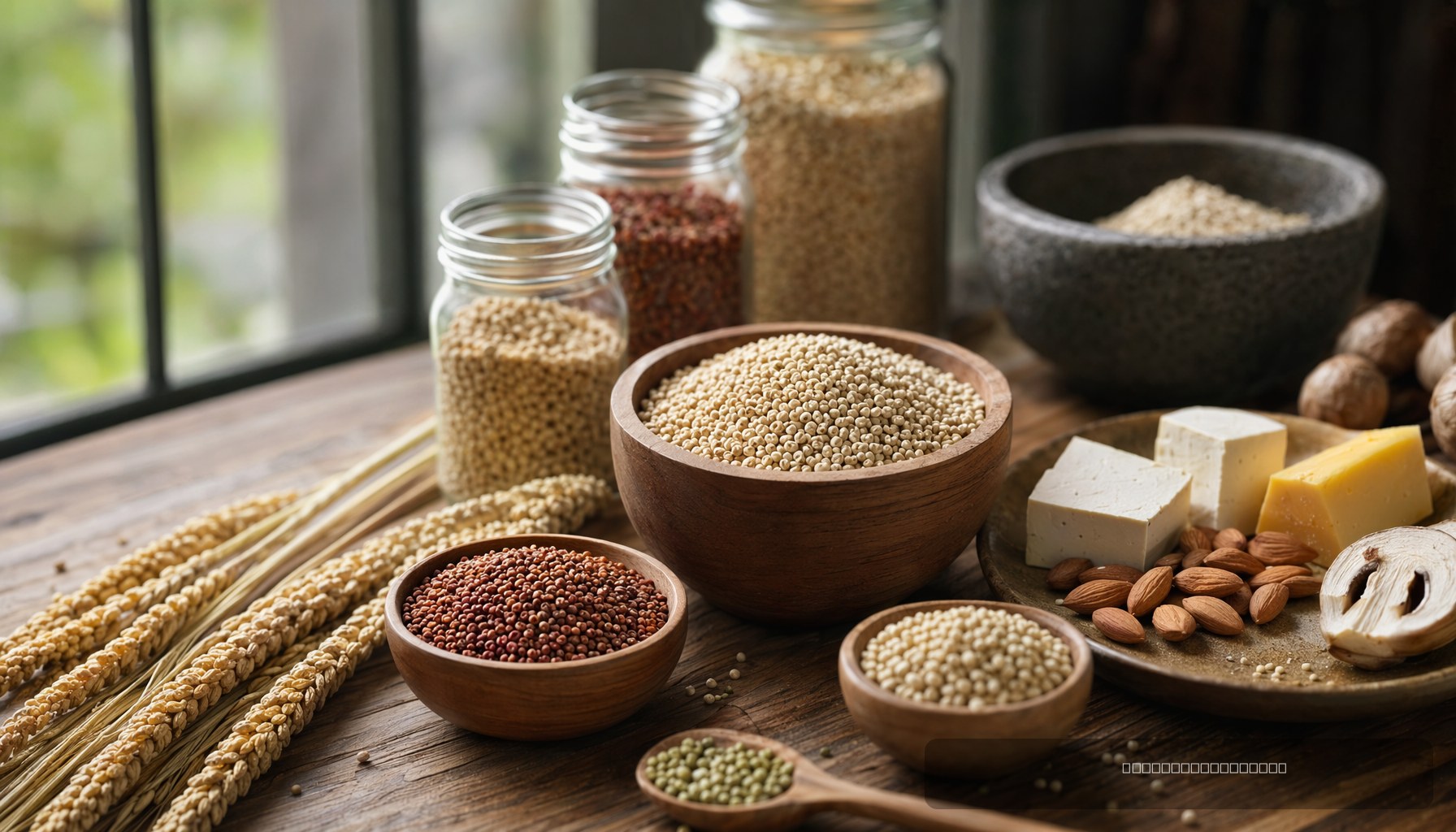
A Delhi RCT published in the European Journal of Nutrition & Food Safety found millet-based diets combined with supplements significantly outperformed supplements alone for vitamin B12 and D gains, especially in women.
A randomised controlled trial (RCT) published in the European Journal of Nutrition & Food Safety found that adults eating a millet-rich diet alongside vitamin supplements recorded a median vitamin B12 increase of 302 pg/mL — nearly four times the 78 pg/mL gain seen in participants taking supplements alone. Vitamin D levels rose by 49.9 ng/mL in the millet group compared to 31.7 ng/mL in the control group, with both differences most pronounced among women participants.
The study was conducted among 54 adults aged 18–45 at the National Association of the Blind (NAB) in Delhi-NCR over 60 days, with results published in May 2026. Researchers from the All India Institute of Medical Sciences (AIIMS) New Delhi, the Celiac Society of India, and Dr Dangs Lab — including nutritionist Ishi Khosla, public health physician Chandrakant S. Pandav, and pathologist Arjun Dang — designed the trial to test whether millet-rich meals could amplify the micronutrient benefits of standard supplementation. The motivation: India carries one of the world's heaviest burdens of "hidden hunger," with vitamin D, vitamin B12, and iron deficiencies widespread across income groups, driven partly by cereal-heavy, low-diversity diets. The Economic Times Healthworld report on the study notes that researchers link this deficiency burden partly to the post-Green Revolution dietary shift away from traditional grains like millets toward polished wheat and rice.
What changed — and what the numbers actually mean
The trial split 54 participants into two arms. The control group received oral supplements of vitamin D, vitamin B12, and a multivitamin. The intervention group received the identical supplement regimen plus structured millet-based meals. After 60 days, haemoglobin levels also improved significantly in women eating millets, adding an iron-status signal to the B12 and D findings.
The headline numbers are striking, but the study's own authors are careful about what they prove. Supplements were described as the primary driver of improvement in both B12 and D; the millet diet appears to have provided additive — not standalone — benefits. This is a meaningful distinction for anyone tempted to swap their supplement routine for a bowl of ragi porridge. Millets are rich in minerals, dietary fibre, and antioxidant compounds, and the researchers suggest these properties may enhance absorption of fat-soluble and water-soluble micronutrients, but the precise mechanism is not established by this trial.
The gender split in results also deserves scrutiny. Improvements among men did not reach statistical significance — but the male subgroup comprised only six participants per arm. That is too small a sample to conclude that millets don't help men; it simply means the trial was underpowered to detect an effect in that subgroup. Future, larger trials with sex-stratified recruitment would be needed before drawing conclusions either way.
The study population — visually impaired adults at NAB Delhi — is a specific institutional setting. Participants' baseline diets, sun exposure (relevant to vitamin D synthesis), and activity levels may differ from the general urban or rural Indian population, which limits how broadly these results can be extrapolated. The 60-day window is also relatively short for assessing sustained nutritional change.
None of this makes the findings unimportant. An RCT design, even a small one, sits higher on the evidence hierarchy than the observational and epidemiological data that most millet-health claims rest on in India. The involvement of AIIMS researchers and publication in a peer-reviewed journal gives this more weight than a brand-commissioned white paper.
What buyers and cooks should do
For everyday Indian households, the practical takeaway is straightforward: adding millets to your existing diet is unlikely to hurt and may meaningfully support micronutrient status, particularly if you are already taking supplements for diagnosed deficiencies. Study author Ishi Khosla told the Times of India that "portion size and timing are key" — a reminder that millets are not a free-for-all. Some millets, particularly pearl millet (bajra) and finger millet (ragi), contain phytates that can inhibit mineral absorption if consumed in very large quantities without preparation steps like soaking or fermentation.
A few practical points for clean-label shoppers and home cooks:
Choose whole-grain millet products. Packaged millet flours and instant mixes vary widely in processing. Look for products with a single-ingredient label — "finger millet flour" or "foxtail millet" — rather than blends with added maltodextrin, refined flour, or flavour enhancers. Brands like Slurrp Farm (Wholsum Foods) and True Elements market millet-based products in India; check ingredient lists rather than front-of-pack health claims, since FSSAI's health claim regulations under FSS (Health Claims) Regulations 2018 restrict but do not eliminate vague nutrient language.
Soak or ferment before cooking. Traditional preparation methods — overnight soaking of whole millets, or fermentation for dosa and idli batters — reduce phytate content and improve the bioavailability of zinc, iron, and magnesium. This matters especially if you are relying on millets to support iron or B12 status.
Don't discontinue prescribed supplements. The Delhi trial reinforces, not replaces, the role of supplementation for people with confirmed deficiencies. If your doctor has prescribed vitamin D or B12 supplements, a millet-rich diet is a useful complement — not a substitute.
Vegan and plant-based eaters should note the B12 caveat. Vitamin B12 is found almost exclusively in animal products. Millets themselves contain negligible B12. The improvement seen in this trial came from supplements; the millet diet likely aided absorption or gut-level utilisation. Vegans still need a reliable B12 supplement or fortified food source — millets alone will not cover the gap.
For Ayurvedic and Jain dietary frameworks, millets have long been considered sattvic and are compatible with both traditions. Ragi (finger millet), jowar (sorghum), and barnyard millet (sama) are already staples in many Jain households during fasting periods. This trial adds a clinical data point to what traditional food systems have long recommended.
The broader policy implication — that India's post-Green Revolution retreat from millet cultivation may have worsened population-level micronutrient deficiency — aligns with the Indian government's push to designate 2023 as the International Year of Millets and FSSAI's ongoing efforts to promote dietary diversity. Whether institutional meal programmes (mid-day meals, anganwadi feeding) will incorporate these findings into menu planning remains to be seen; no regulatory update has been announced as of this publication.
Sources
- Millet diet likely to improve vitamin B12, vitamin D levels: Delhi Trial — Economic Times Healthworld
- European Journal of Nutrition & Food Safety — Journal homepage
- FSSAI Food Safety and Standards (Health Claims) Regulations 2018
- Indian Council of Medical Research — Dietary Guidelines for Indians (2024)
- FAO — Millets: Future of Food and Farming (International Year of Millets 2023)