FSSAI's western region director says India's $10B nutraceuticals sector could hit $500B by 2047, outpacing pharma, with Ayur Ahara and food fortification named as the other two growth pillars.
India's nutraceuticals market could grow from its current $10 billion valuation to $500 billion by 2047, according to Pritee Chaudhary, Regional Director (Western Region) of the Food Safety and Standards Authority of India (FSSAI), speaking to ETHealthworld on the sidelines of a nutrition symposium in July 2026.
Chaudhary's projection places nutraceuticals on a trajectory to outpace India's nearly $50 billion pharmaceutical market by a factor of ten within two decades. The claim is a forecast, not a regulatory target. FSSAI has not published a formal market-size schedule or a notified growth roadmap to back the $500 billion figure, so it should be read as a directional signal from a senior official rather than a binding policy number.
The five-W picture: Chaudhary made the statement at a symposium (location not specified in the report) on 4 July 2026. She spoke in her capacity as FSSAI's western regional head, not as a spokesperson for the full authority. The audience was the nutrition and food industry. The reason the number matters is that it signals how seriously India's food regulator now treats nutraceuticals as an economic category, not just a compliance headache.
What changed in how FSSAI frames this sector
For most of the past decade, FSSAI's public communications around nutraceuticals focused on enforcement: cracking down on misleading health claims, tightening labelling rules under the Food Safety and Standards (Health Supplements, Nutraceuticals, Food for Special Dietary Use, Food for Special Medical Purpose, Functional Food and Novel Food) Regulations 2016, and flagging products that crossed the line into drug territory. The tone at this symposium was different.
Chaudhary described a model of "minimal enforcement" paired with greater industry self-assessment. "The major responsibility to ensure products are safe and of high quality lies with food businesses themselves," she said. That framing shifts the compliance burden explicitly onto manufacturers, which has direct implications for clean-label brands that already invest in third-party testing and transparent ingredient disclosure. It also means buyers cannot assume FSSAI is actively auditing every product on shelf.
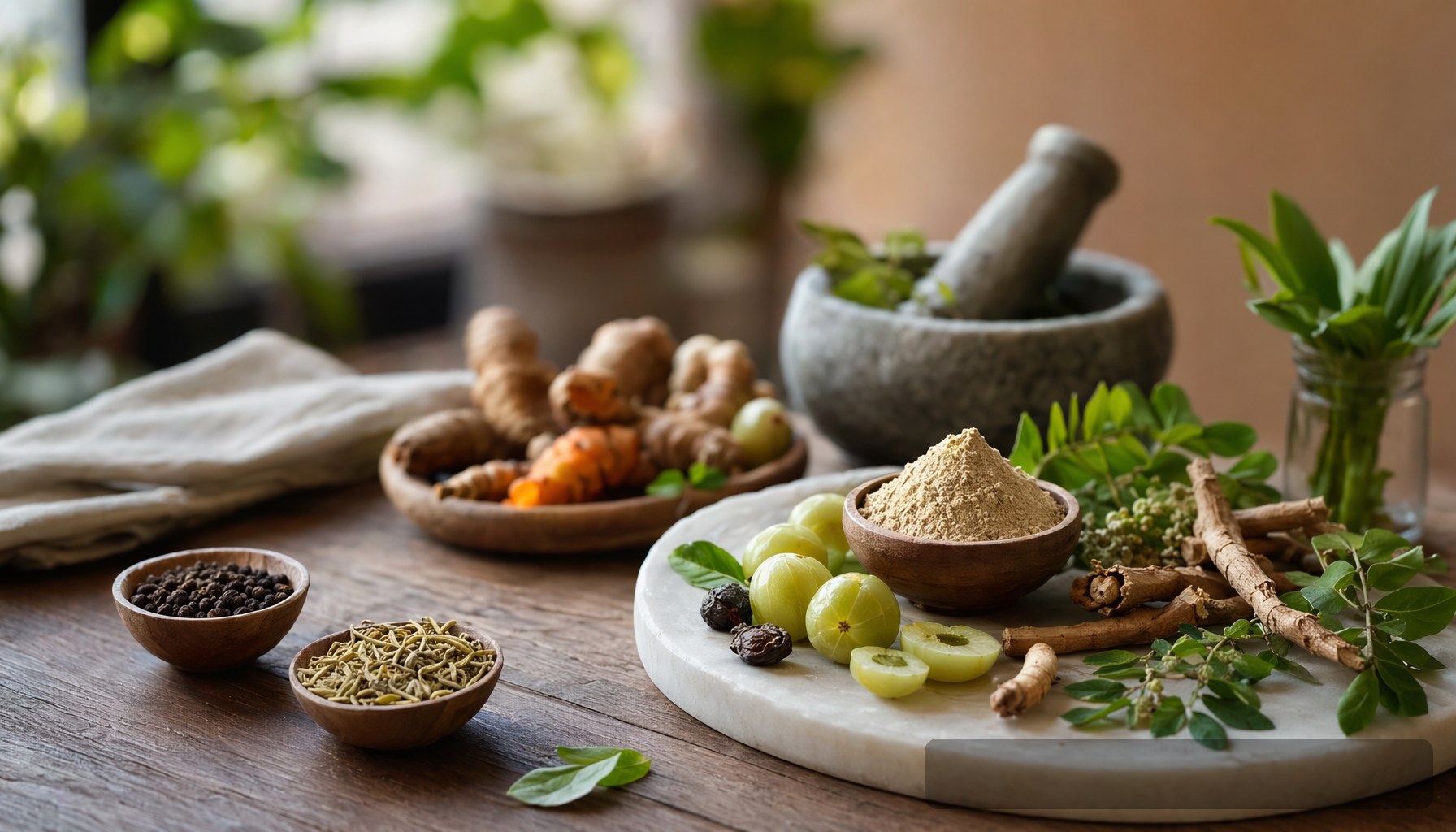
She identified three growth segments. The first is nutraceuticals broadly defined: health supplements, foods for special dietary and medical purposes, prebiotics, and probiotics. The second is Ayur Ahara, a category built around India's 1,700-plus medicinal herbs and 52 agro-climatic zones, positioned to supply bioactive ingredients to global markets. The third is food fortification, enriching staple foods with micronutrients to address population-level deficiencies.
Ayur Ahara is the least developed of the three. FSSAI introduced the Ayur Ahara concept as a bridge between Ayurvedic food traditions and modern food safety standards, but the regulatory framework for it remains incomplete. Chaudhary acknowledged that "significant progress is yet to be achieved" in this segment, which is an honest admission that the category's commercial potential is ahead of its regulatory scaffolding.
The metro-to-Tier-II shift is also worth noting. Chaudhary said nutraceuticals have become mainstream in metro cities and are gaining acceptance in Tier-II and Tier-III cities. Independent market data from IMARC Group and Mordor Intelligence broadly support the direction of that claim, though their absolute figures differ from FSSAI's $500 billion projection. The spread between analyst estimates and the FSSAI figure is wide enough that consumers and investors should treat the $500 billion number as aspirational.
What buyers and cooks should do with this information
The regulatory shift toward self-compliance is the most actionable part of Chaudhary's statement for anyone buying nutraceuticals or clean-label functional foods in India.
FSSAI has an advertisement monitoring mechanism and can act on false claims, but the authority is signalling it will not be the first line of quality assurance. That means the label, the third-party certificate, and the brand's own transparency matter more than ever.
When buying health supplements, probiotics, or fortified foods, look for products that carry a valid FSSAI licence number (14-digit, starting with the state code) and, where possible, a certificate of analysis from an NABL-accredited lab. Brands that publish batch-level test results are doing more than the minimum.
For Ayur Ahara products specifically, the regulatory category is still forming. Products marketed under Ayurvedic or herbal claims can currently sit in a grey zone between FSSAI's nutraceutical regulations and the Ministry of AYUSH's jurisdiction. If a product claims to treat or prevent a disease, it legally requires a drug licence, not a food licence. FSSAI's own guidelines say health supplements cannot make therapeutic claims, so any product promising to "cure" or "reverse" a condition is almost certainly overclaiming.
For home cooks interested in functional ingredients, the Ayur Ahara framing is a useful prompt to look at whole-food sources: turmeric with black pepper for bioavailability, moringa as a micronutrient source, or fermented foods like idli and kanji for probiotic benefit. These do not require a regulatory category to be useful, and they carry none of the labelling ambiguity that packaged supplements do.
Food fortification is the segment with the clearest public-health mandate. FSSAI's fortification standards for rice, wheat flour, edible oil, milk, and salt are already notified. If you buy fortified staples, the "+F" logo on pack is the mark to look for. It indicates the product meets FSSAI's nutrient addition standards, though it does not guarantee the absence of other additives.
The $500 billion projection, if it materialises even partially, will bring more brands, more claims, and more products into a market where FSSAI has explicitly said it expects manufacturers to police themselves. That is a reason to read labels more carefully, not less.
Sources
- Preventive healthcare boom could propel India's nutraceuticals market to $500 billion by 2047: FSSAI Regional Director
- Food Safety and Standards (Health Supplements, Nutraceuticals, Food for Special Dietary Use, Food for Special Medical Purpose, Functional Food and Novel Food) Regulations 2016
- FSSAI Food Fortification Resource Centre: +F logo and standards
- FSSAI Ayur Ahara initiative overview