Three Hyderabad dairy and sweet units lost FSSAI licenses on October 15, 2026, after TG SAFE found hygiene violations including gutka stains, fly infestation, and rusted cold storage.
The Telangana Standards Authority for Food and Essential Drugs (TG SAFE) suspended the FSSAI licenses of three sweetmeat and dairy manufacturing units in Jeedimetla, Hyderabad, on October 15, 2026, following inspections that uncovered multiple food safety violations under the Food Safety and Standards Act, 2006.
Seven enforcement teams, each comprising food safety officers and police personnel, swept through seven khoya and sweet manufacturing and retail units across Hyderabad and its surrounding districts. The teams seized or discarded 2,480 kg of food articles, including khoya and laddus, valued at approximately Rs 3.78 lakh, and collected eight samples on suspicion of adulteration.
What the inspectors found
The three units that lost their licenses were Bhagya Laxmi Sweets and Burfi, Balaji Magic Mithai, and Yashoda Dairy, all operating in Jeedimetla. All three were directed to stop business immediately.
The inspection reports describe conditions that go well beyond minor paperwork lapses. Officers documented gutka stains near food preparation areas, dirty walls, improper storage practices, housefly infestation, unhygienic drains, a rusted cold room, and a complete absence of records relating to milk procurement. That last point matters under FSSAI regulations because licensed dairy units are required to maintain traceability documentation for raw milk. Without those records, there is no way to verify the source, quality, or testing history of the milk used in products sold to consumers.
Separately, Madhura Dairy Products at Cheeryal village in Keesara mandal, Medchal Malkajgiri district, and Desi Dairy Sweets at Jalpally were ordered to close for operating without any FSSAI license at all, not just a suspended one. Show-cause notices were issued to Madhura Dairy Products, Desi Dairy Sweets, and Jagannath Milk Dairy at Peerzadiguda. TG SAFE has indicated further penalty proceedings will follow.
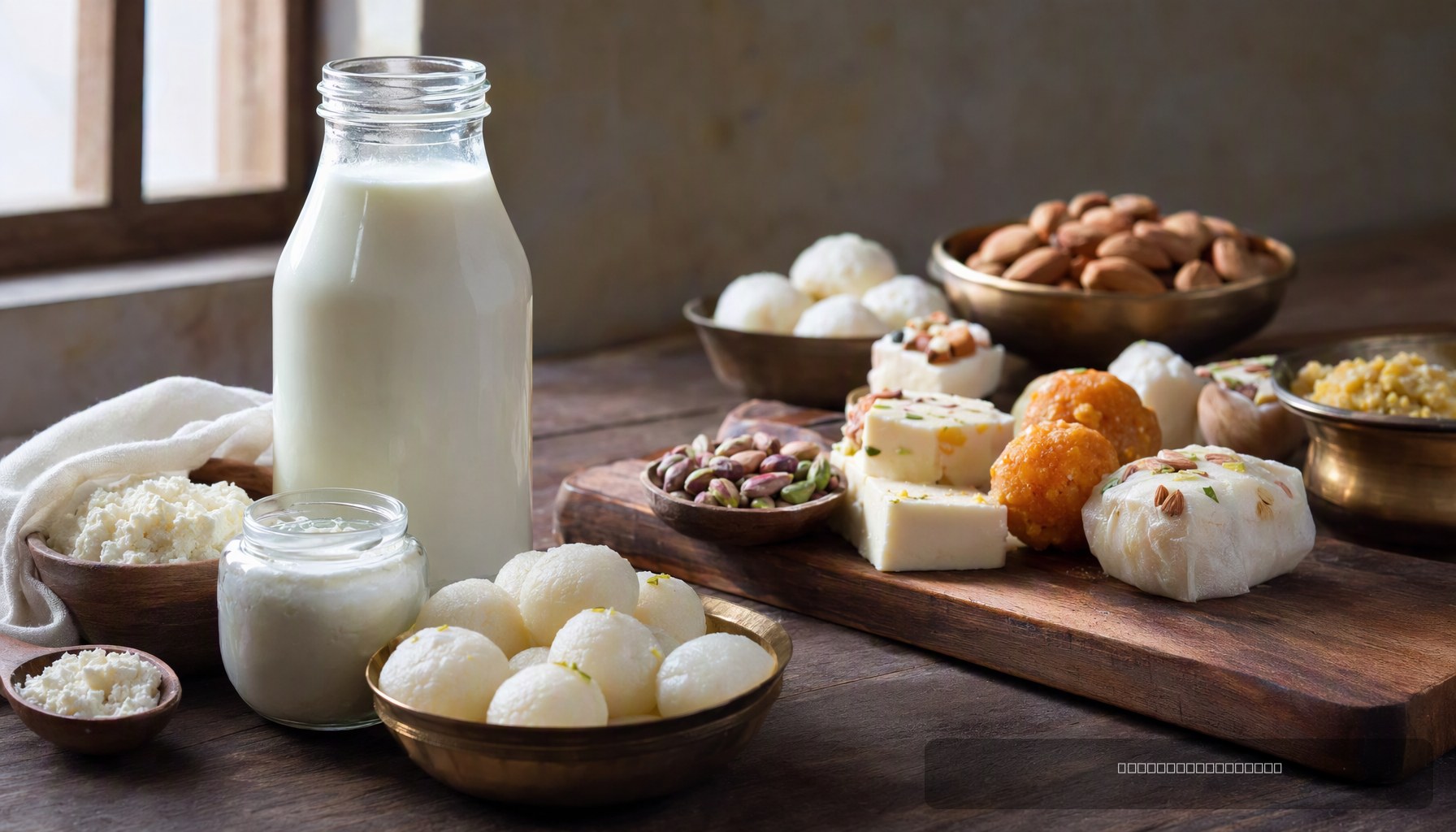
Khoya, for readers unfamiliar with the ingredient, is a concentrated milk solid made by simmering whole milk until most of the water evaporates. It is the base for a wide range of Indian sweets including barfi, gulab jamun, and laddus. Because it is high in protein and fat with low residual moisture, it is a common target for adulteration with starch, vegetable fat, or synthetic milk solids. Unrefrigerated transport, which TG SAFE flagged in a related seizure of khoya transported to Hyderabad in plastic covers without cold chain, accelerates bacterial growth and makes adulteration harder to detect visually.
Why this matters for buyers
For anyone buying sweets or dairy products in Hyderabad, especially in the run-up to the festival season when khoya-based mithai volumes spike, this enforcement action is a reminder that FSSAI licensing is a floor, not a ceiling. A license confirms that a unit met basic standards at the time of inspection and registration. It does not guarantee ongoing compliance, which is exactly why surprise inspections like this one exist.
The presence of gutka stains near food preparation areas is particularly concerning. Gutka is a chewing tobacco product. Its presence in a food manufacturing zone indicates that workers are consuming tobacco products in spaces where open food is handled, a direct contamination risk that no amount of packaging can neutralize after the fact.
A rusted cold room is a structural problem, not a one-day lapse. Rust in a cold storage environment can flake into stored food and also signals that the temperature control equipment may not be functioning correctly, which directly affects the safety of perishable dairy products.
What buyers and cooks should do
FSSAI's FoSCoS portal allows anyone to search for a food business by name or license number and check whether the license is active, suspended, or cancelled. Before buying from a local mithai shop or dairy supplier, especially one you haven't used before, a quick search takes under two minutes.
When buying khoya or khoya-based sweets, ask the seller where the khoya comes from and whether it arrived refrigerated. Legitimate suppliers will have an answer. Khoya that smells sour, has an unusual grainy texture, or leaves a starchy residue when dissolved in warm water is worth avoiding. The FSSAI's consumer guidance on milk adulteration outlines simple home tests, including the iodine test for starch adulteration.
For households that cook with khoya regularly, buying from branded, packaged sources with a visible FSSAI license number and a printed manufacturing date is lower risk than loose khoya from an unlicensed vendor. That is not a guarantee of quality, but it at least creates a paper trail.
TG SAFE has not yet published the adulteration test results for the eight samples collected on October 15. Those results, when released, will clarify whether the violations were limited to hygiene and documentation or extended to the composition of the food itself. The Hindu's Telangana coverage is the primary source for the inspection details reported here.