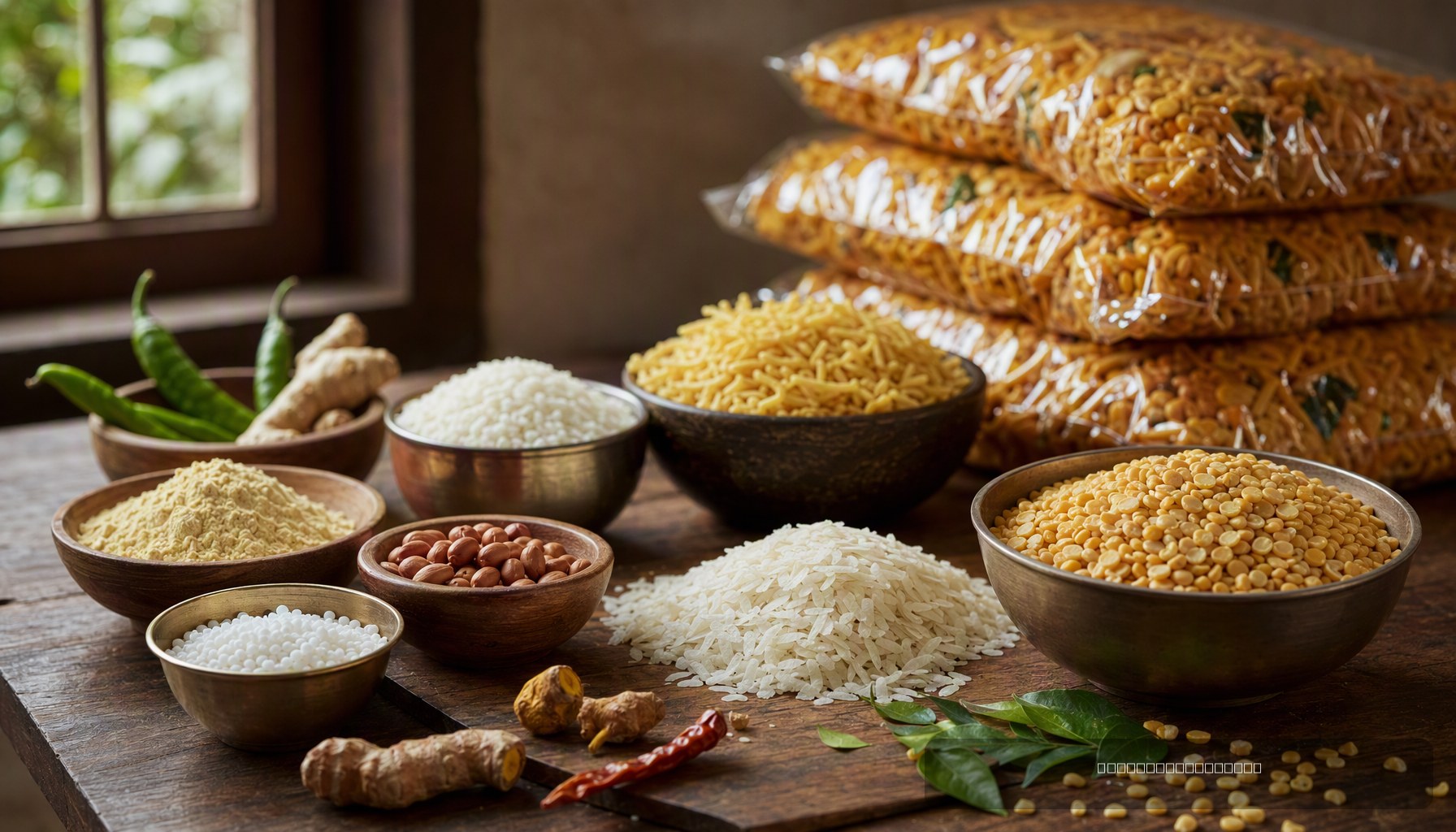
TG SAFE seized 55 tonnes of mislabelled snacks from Sahil Foods in Hyderabad's Katedan area, suspended four unit licences, and collected 11 samples for adulteration testing.
The Telangana Standards Authority for Food and Essential Drugs (TG SAFE) seized 55 tonnes of mislabelled food products worth Rs 33.94 lakh from Sahil Foods, a Hyderabad-based snack and savoury manufacturer, after inspecting five of its units in Premavatipet near Katedan on October 19, 2026.
Sahil Foods is a company engaged in the manufacture and sale of packaged snacks and savouries. TG SAFE enforcement teams found a range of violations across the five units: hygiene failures, licensing gaps, and labelling irregularities that together point to a systemic breakdown rather than isolated slip-ups. Four of the five units had their licences and registrations suspended, and all four were directed to stop operations immediately. Eleven food samples were collected for laboratory analysis on suspicion of adulteration.
What the inspectors actually found
The violations fall into three broad categories, and each one matters to anyone who reads a food label and expects it to mean something.
Hygiene and premises. Inspectors documented dusty, poorly maintained machinery, production conveyors clogged with food waste, and inadequate ventilation. Food waste was littered across the premises. Synthetic food colours were stored in untidy buckets rather than properly labelled, sealed containers. Some food handlers were found chewing gutka or pan masala while working on the production floor, a direct contamination risk. Several food articles were stored on the floor instead of on pallets, which is a basic requirement under FSSAI's Food Safety and Standards (Licensing and Registration of Food Businesses) Regulations, 2011.
Licensing gaps. Certain food categories were being manufactured without the required endorsements on the units' FSSAI licences. An FSSAI licence is product-category specific: a manufacturer cannot legally produce a food product that is not listed on their licence schedule. Making unlisted products is not a paperwork technicality. It means those products have never been reviewed for compliance with the relevant food standards under the Food Safety and Standards Act, 2006.
Shelf-life and record-keeping. Products were packed with a declared shelf life of three months, but the units had no shelf-life study records to support that declaration. Under FSSAI regulations, a manufacturer must be able to demonstrate through documented testing that a product remains safe and within specification for the period printed on the pack. Without those records, the best-before date on every packet from these units is a guess. Production and sales records were also absent, and water analysis reports and food testing records were not maintained.
Why this matters for clean-label shoppers
Mislabelling is not only a regulatory offence. For a consumer trying to avoid specific ingredients, allergens, or additives, a label that does not accurately reflect what is in the packet removes the only tool they have.
India's packaged food labelling rules, now governed by the FSSAI Food Safety and Standards (Labelling and Display) Regulations, 2020, require manufacturers to declare ingredients in descending order of weight, list all additives by their functional class and INS number, and print an accurate best-before date. A unit that does not maintain production records cannot reliably verify that any of those declarations are consistent from batch to batch.
The synthetic food colours stored in unlabelled buckets are a specific concern. Many synthetic colours permitted in India, such as Sunset Yellow FCF (INS 110) and Tartrazine (INS 102), carry FSSAI-mandated usage limits. Without proper storage labelling and batch records, there is no way to confirm those limits were observed. The 11 samples collected for adulteration testing will likely examine colour levels, among other parameters, though TG SAFE has not yet published the laboratory results.
The gutka and pan masala finding is worth noting separately. Both products contain tobacco. Tobacco contamination of food is a direct food safety risk, and the presence of workers consuming them on the production floor suggests the units had no functional hygiene protocol in place.
What buyers and cooks should do
Sahil Foods products are sold in Hyderabad's retail and wholesale markets, though the company does not appear to have a significant branded retail presence outside the region. TG SAFE has not yet published a product recall notice or a list of specific SKUs affected by the seizure. Until that information is available, consumers cannot easily identify which packets came from the suspended units.
The practical steps are straightforward. Check the FSSAI licence number printed on any packaged snack you buy. You can verify a licence's validity and the product categories it covers through the FSSAI FoSCoS portal. A licence that does not list the product category on the pack is a red flag. Look for a batch number and manufacturing date alongside the best-before date. A manufacturer with proper shelf-life records will always print a batch number because that is how they trace which batch was tested.
For snacks bought loose from local shops in areas like Katedan, Mehdipatnam, or other parts of Hyderabad's wholesale food belt, there is currently no label to check at all. The safest option is to buy packaged snacks from manufacturers whose FSSAI licence you can verify and who publish ingredient and additive information clearly.
TG SAFE has not released a timeline for the laboratory results on the 11 collected samples. When those results are published, they will determine whether criminal prosecution under the Food Safety and Standards Act follows, in addition to the licence suspensions already in effect.
Sources
- 55 tonnes of mislabelled food products worth Rs 33.94 lakh seized from snack manufacturing units in Hyderabad — The Hindu
- Food Safety and Standards (Labelling and Display) Regulations, 2020 — FSSAI
- Food Safety and Standards (Licensing and Registration of Food Businesses) Regulations, 2011 — FSSAI
- Food Safety and Standards Act, 2006 — FSSAI
- FoSCoS licence verification portal — FSSAI