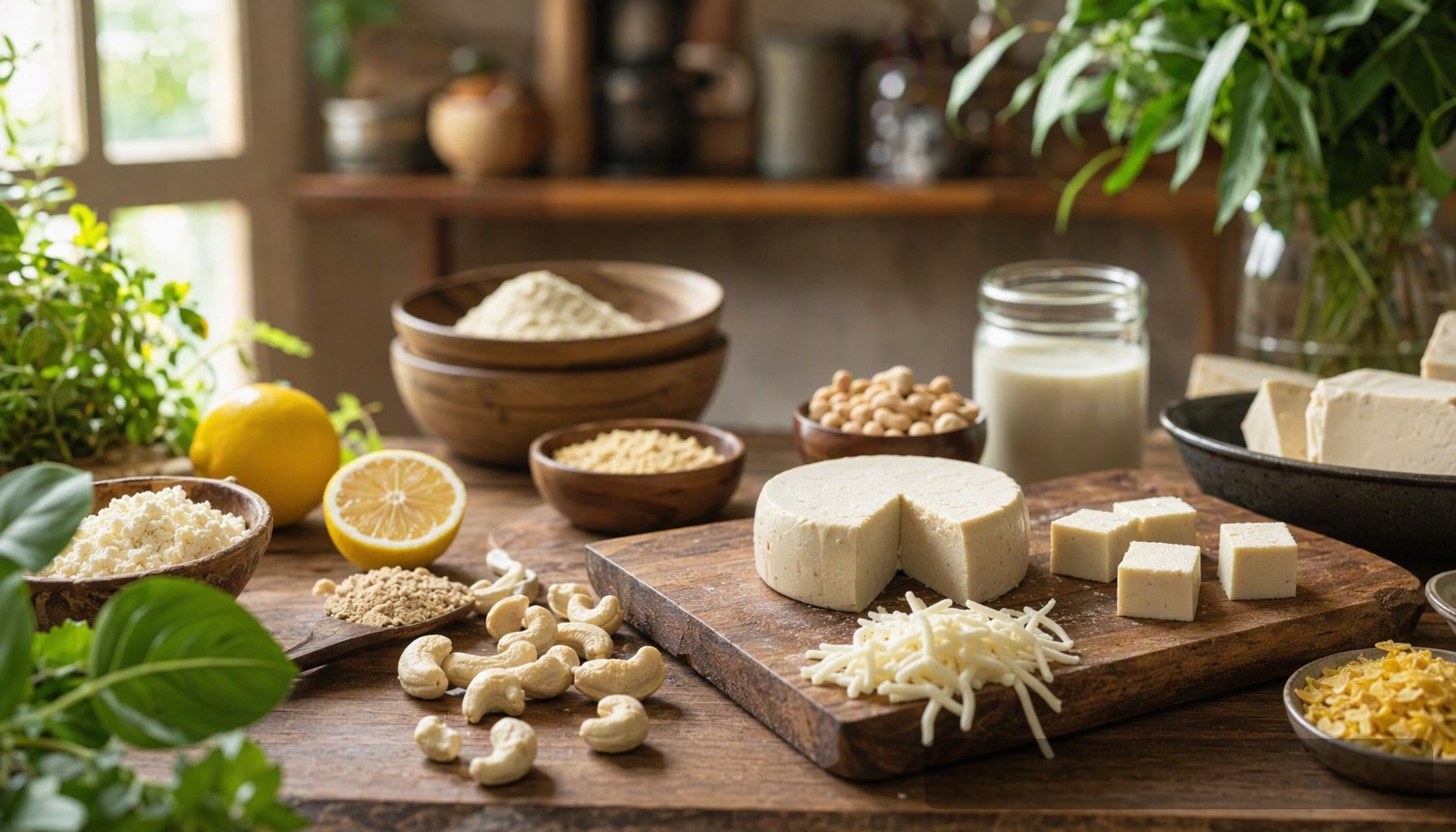
Indian vegans are making additive-free mozzarella at home because commercial vegan cheese in India carries no regulated standard and often contains processed fillers.
Homemade vegan mozzarella, typically built from a base of soaked cashews or tofu blended with tapioca starch, nutritional yeast, and lactic acid, is gaining traction among Indian home cooks who find commercial dairy-free cheese options either unavailable, expensive, or loaded with additives.
In October 2025, users on r/VeganIndia cross-posted a recipe thread from r/DesiVegans where one cook claimed to have finally cracked a vegan mozzarella that stretches and melts close to the dairy original. The post drew quick engagement, with commenters calling the result "delicious" and asking for the method. It is a small data point, but it sits inside a broader pattern: Indian vegans are increasingly turning to scratch cooking because the store-bought category has not caught up with their expectations on either ingredient quality or price.
What the commercial market actually looks like
The handful of vegan cheese products available in Indian cities, mostly imported or sold through specialty e-commerce, share a common ingredient problem. Many rely on modified starch (often listed as "modified tapioca starch" or simply "E1422"), refined coconut oil, and carrageenan (E407) as the structural backbone. Carrageenan is a seaweed-derived polysaccharide used as a gelling agent; a 2017 review in Frontiers in Pediatrics flagged it as a potential gut irritant at high doses, though FSSAI currently permits its use in processed foods under Schedule I of the Food Safety and Standards (Food Products Standards and Food Additives) Regulations, 2011. Modified starch is a partially hydrolyzed or chemically treated starch that improves texture but raises the processing level of the final product well above what most clean-label shoppers expect.
FSSAI has no dedicated product standard for "vegan cheese" as of this writing. The agency's Plant Based Foods draft regulation has been in circulation since 2023 but has not been finalized, which means brands can use the word "vegan" on packaging without meeting any compositional benchmark. A product could contain refined oils, synthetic emulsifiers, and flavour enhancers and still carry a vegan claim legally.
Why home cooking fills the gap
Cashew-based cheese is the most common homemade route in Indian vegan communities. Raw cashews are soaked overnight, blended with water, and then fermented briefly with a probiotic capsule or a small amount of apple cider vinegar to develop tang. Tapioca starch, when cooked into the blend, creates the stretch that most people associate with mozzarella. The result contains no emulsifiers, no carrageenan, and no refined oils. The ingredient list is short enough to read in one breath.
Nutritional yeast, the other staple in these recipes, is a deactivated form of Saccharomyces cerevisiae. It is not a fermented live-culture product, so it does not function as a probiotic, but it does supply B vitamins (including B12 in fortified versions) and glutamates that approximate a mild cheesy flavour. Brands like Bragg (marketed in India through specialty importers) and Urban Platter sell nutritional yeast locally, though neither is cheap at scale.
The cost math still favours homemade for most households. A 200 g block of imported vegan cheese can cost between Rs 400 and Rs 800 in Indian specialty stores. A batch of cashew mozzarella of similar weight costs roughly Rs 120 to Rs 180 in raw ingredients, depending on cashew prices in your city.
What buyers and cooks should do
If you are buying commercial vegan cheese in India, read the ingredient list before the front-of-pack claim. Look for carrageenan (E407), methylcellulose (E461), and any modified starch (E1400 series). These are not automatically harmful at the quantities in a single serving, but they move the product away from the whole-food profile that most clean-label shoppers are after.
For home cooks attempting cashew mozzarella, a few practical notes from community threads and food science sources:
- Tapioca starch is the stretch agent. Arrowroot works as a partial substitute but produces a slightly gluey texture at high heat.
- Fermentation time matters. A 12-to-24-hour room-temperature ferment (using one opened probiotic capsule per cup of cashew cream) develops enough acidity to mimic the lactic tang of dairy mozzarella. Skipping this step produces a flat, one-dimensional flavour.
- Agar-agar (E406), derived from red algae, can replace carrageenan in firmer cheese styles. It sets more rigidly than carrageenan and is widely available in Indian grocery stores under the name "China grass."
- Nutritional yeast from a fortified source adds B12, which is otherwise absent from a fully plant-based diet. Check the label: unfortified nutritional yeast contains no B12.
For Jain cooks, cashew-based cheese is generally acceptable, but check whether the nutritional yeast brand uses any underground vegetable derivatives in processing. Most do not, but the supply chain is not always transparent.
The r/VeganIndia and r/DesiVegans communities are not a regulated source of food safety information, and recipe results vary with water quality, cashew freshness, and ambient temperature during fermentation. Anyone with a nut allergy should note that cashew is a tree nut and a common allergen. Sunflower seed or hemp seed bases are workable substitutes, though the flavour profile shifts noticeably.
FSSAI's pending plant-based foods regulation, once finalized, may create a compositional floor for products sold as vegan cheese in India. Until then, the label tells you very little, and the ingredient list tells you almost everything.
Sources
- r/VeganIndia: This homemade vegan cheese looks promising!
- r/DesiVegans: Okay I think I have finally figured out vegan mozzarella
- Carrageenan: How a "Natural" Food Additive Is Making Us Sick (Frontiers in Pediatrics, 2017)
- FSSAI Food Safety and Standards (Food Products Standards and Food Additives) Regulations, 2011
- FSSAI Draft Regulations on Plant Based Foods