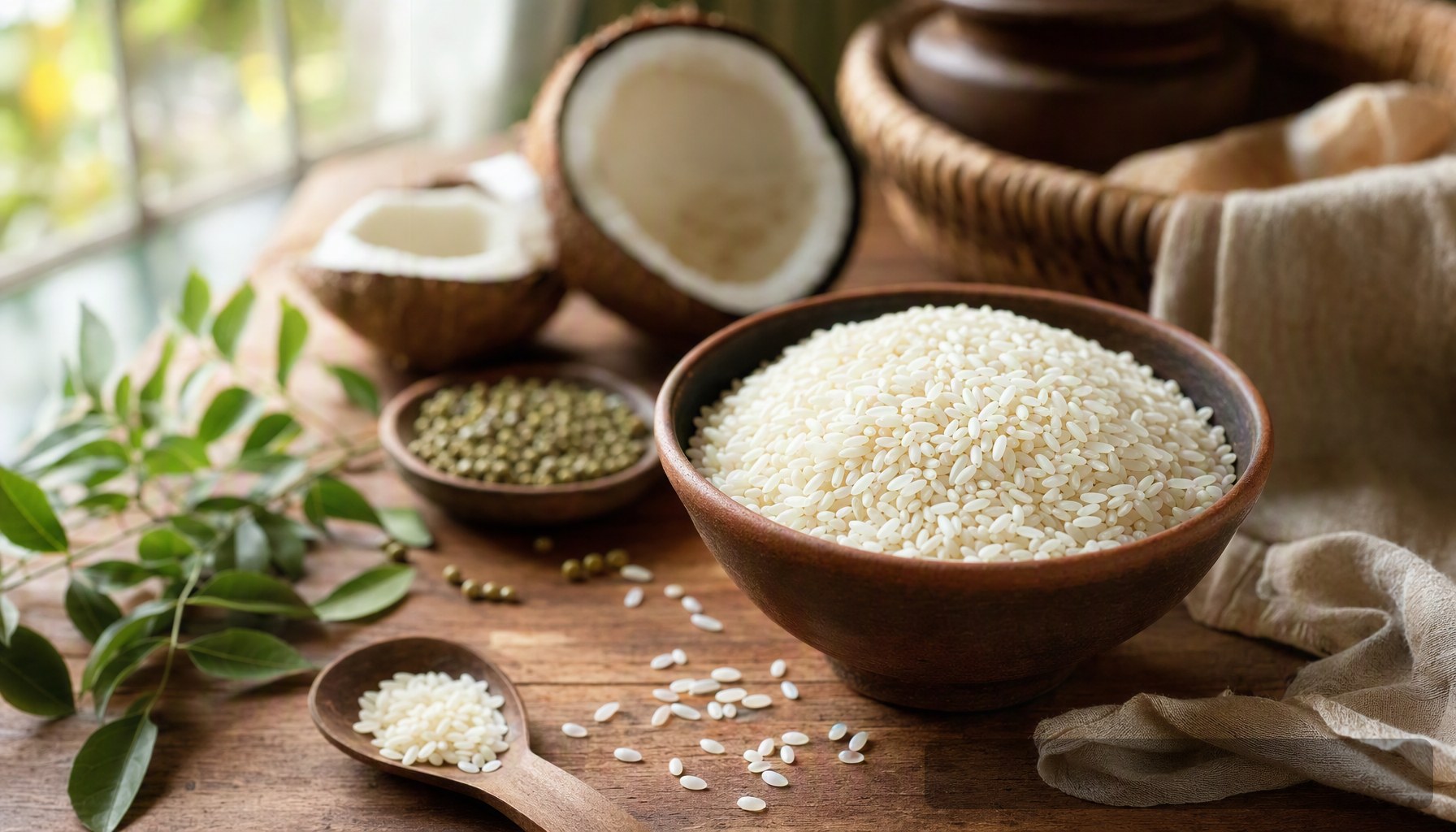
Maharashtrian Indriyani rice mimics the stickiness of Japanese or glutinous rice at a much lower price, making it a practical pick for vegan cooks in India.
Indriyani rice is a short-grain variety native to the Konkan and western Maharashtra region, traditionally prized for its soft, slightly sticky texture and mild aroma after cooking. Unlike long-grain basmati, Indriyani grains cling together when steamed, which is exactly the property vegan cooks need when replicating East and Southeast Asian dishes that call for glutinous or Japanese sushi rice.
A user on r/VeganIndia recently flagged the variety as a practical swap after six months of experimenting with plant-based cooking. The post, shared in September 2025, noted that imported Oriental and Japanese sticky rice varieties carry steep price tags in Indian stores, and that Indriyani delivered comparable results without the cost. Several commenters confirmed the tip, with one pointing out that the rice also pairs well with everyday Indian preparations like dal and kadhi, which means a single bag does double duty across cuisines.
What makes Indriyani behave like sticky rice
Rice stickiness is determined largely by the ratio of two starch types: amylose and amylopectin. Long-grain varieties such as basmati are high in amylose, which keeps grains separate after cooking. Short-grain and glutinous varieties are high in amylopectin, which gelatinises more readily and causes grains to clump. Indriyani sits in the short-grain category. Its amylopectin content is higher than basmati but lower than true glutinous (waxy) rice, which contains almost no amylose at all. The practical result is a grain that sticks enough for rice bowls, onigiri-style balls, and sticky curry pairings, though it will not achieve the near-translucent, very chewy texture of fully waxy Thai or Japanese mochi rice.
For most vegan recipes that call for "sticky rice" as a base, including coconut milk rice, mango sticky rice adaptations, or grain bowls topped with tofu and vegetables, Indriyani is close enough that the difference is minor. Where the gap shows up is in preparations that depend on extreme chewiness or that are served cold, such as Japanese onigiri stored overnight or Korean tteok (rice cakes). For those, true glutinous rice is still the better choice.
FSSAI classifies rice broadly under the Food Safety and Standards (Food Products Standards and Food Additives) Regulations, 2011, and does not maintain a separate standard for Indriyani as a named variety. The variety is, however, registered under India's Protection of Plant Varieties and Farmers' Rights Authority (PPV&FRA), which documents its origin in Maharashtra and its agronomic characteristics. No additives, polishing agents, or coatings are required or typical for Indriyani sold in its traditional milled form, which makes it a straightforward clean-label grain.
Where to find it and what to pay
Indriyani rice is widely available in Maharashtra, particularly in Pune, Mumbai, and Nashik, both in local kirana stores and in larger supermarket chains. Outside Maharashtra, it appears in stores that stock regional Indian grains, and several online grocery platforms including BigBasket and Amazon India list it under names such as "Indrayani rice" or "Kolhapur Indrayani." Prices vary, but a kilogram typically costs between Rs 60 and Rs 120 depending on the brand and whether it is organic. Imported Japanese short-grain rice or glutinous rice from Thailand can run Rs 300 to Rs 600 per kilogram or more in specialty stores.
Brands selling Indriyani include smaller regional mills and a handful of organic labels. If you buy from a packaged brand, check the ingredient list: it should read only "rice" with no added starch, talc, or glucose coating. Talc and glucose coatings are sometimes used on cheaper polished rice to improve appearance and are worth avoiding. The PPV&FRA registration covers the raw grain, not any particular brand's processing practices, so label-reading still matters.
What vegan cooks should do
If you want to try Indriyani as a sticky-rice substitute, the cooking method matters as much as the variety. Rinse the rice two or three times until the water runs mostly clear, then soak it for 20 to 30 minutes before cooking. Use slightly less water than you would for basmati: a ratio of 1:1.5 (rice to water) works well in a covered pot on low heat. Avoid stirring during cooking, which breaks the starch structure and can make the result gluey rather than sticky.
For mango sticky rice, replace the glutinous rice with soaked Indriyani, cook it in a mix of coconut milk and water (roughly half and half), and sweeten lightly with jaggery or coconut sugar to keep the dish fully plant-based. The texture will be softer and slightly less chewy than the Thai original, but the flavour profile holds up.
For grain bowls and rice-and-curry combinations, Indriyani needs no special treatment beyond the soak. The commenter on the original Reddit thread who mentioned it alongside dal and kadhi is right: the stickiness that makes it good for Asian dishes also means it absorbs thin, spiced gravies well without falling apart.
One thing to watch: Indriyani has a shorter shelf life than basmati because its higher moisture and fat content make it more prone to going rancid. Buy in smaller quantities, store in an airtight container away from heat, and use within two to three months of opening.