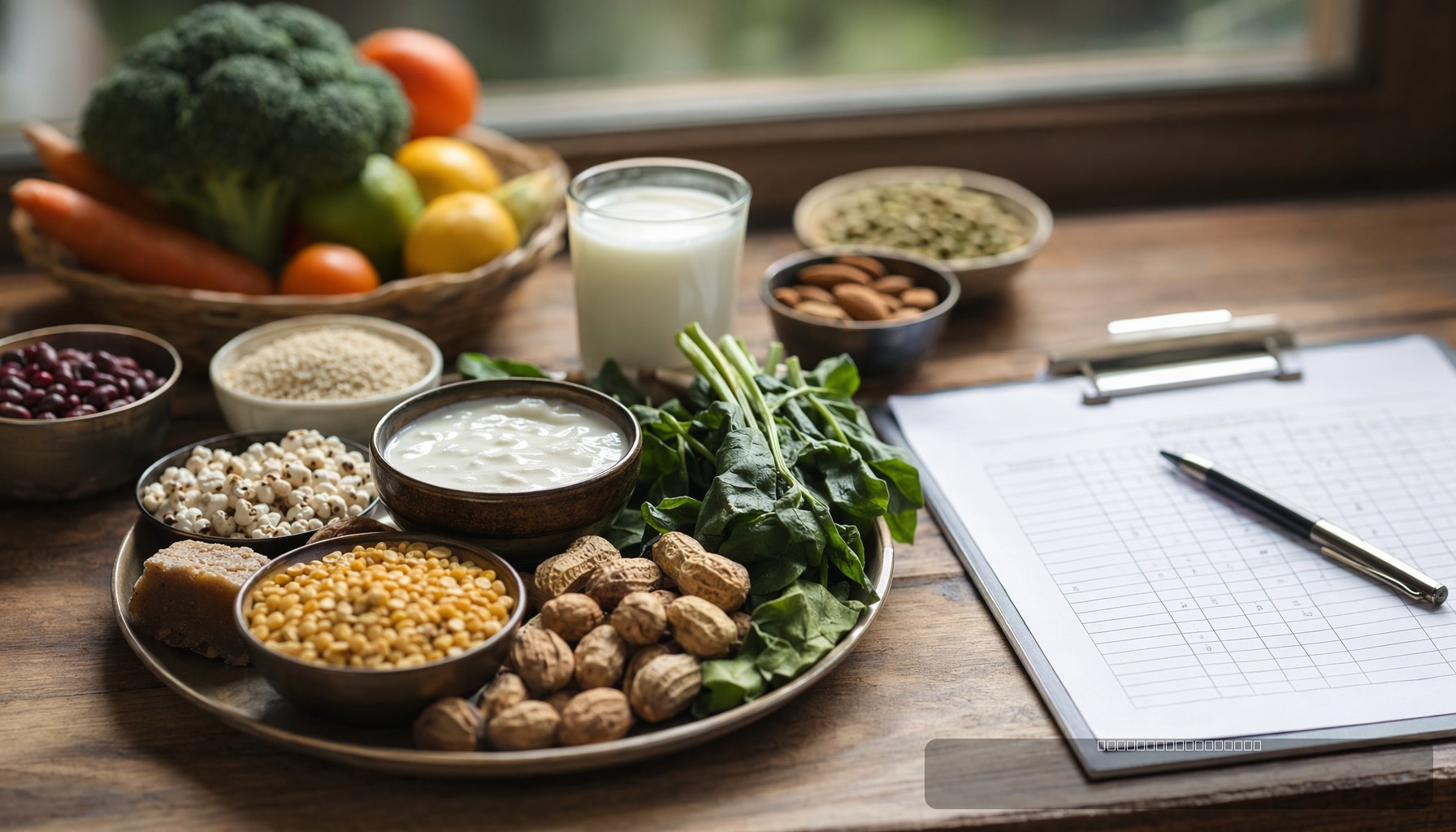
ICMR-NIN Hyderabad has published a 13-food-group Diet Diversity Score validated against biomarkers to screen micronutrient risk in children aged 6 to 10.
Researchers at ICMR-NIN (the Indian Council of Medical Research's National Institute of Nutrition), based in Hyderabad, have developed a dietary screening questionnaire that uses a 13-food-group scoring system to measure diet diversity and flag micronutrient deficiency risk in children aged 6 to 10 years. The study, published in the European Journal of Clinical Nutrition, is the first India-specific Diet Diversity Score (DDS) validated against both nutrient intake data and biological markers for this age group.
The research was led by Dr. SubbaRao M. Gavaravarapu, Scientist G at ICMR-NIN, and the findings were announced on 2 July 2026. The tool is intended for use in school health programmes, the Integrated Child Development Services (ICDS) scheme, and by nutritionists and public health professionals who need a fast, low-cost way to identify children at nutritional risk across India's varied food environments.
What changed
Existing diet diversity tools used globally were not built around the foods Indian children actually eat, nor were they calibrated to the micronutrient gaps most common in this population. The NIN team addressed this by classifying commonly consumed Indian foods into 13 context-specific food groups, each defined by its micronutrient profile rather than by broad botanical or culinary categories.
The scoring threshold is also more sensitive than many earlier tools. A minimum intake of just 5 grams per food group counts toward the score. That is enough to capture a small cup of pulses, a few bites of fruit or vegetables, or milk consumed as part of a mixed dish. This matters because children in low- and middle-income households often consume micronutrient-rich foods in small amounts that conventional recall methods miss entirely.
The DDS was validated by comparing each child's score against adequacy across 10 essential micronutrients and against hemoglobin levels as a biomarker. The correlation held: children who ate from 10 or more of the 13 food groups were significantly more likely to achieve at least 70 percent of their daily micronutrient requirements. Hemoglobin levels, a direct indicator of iron status and anaemia risk, also tracked with higher DDS scores.
Dr. Bharati Kulkarni, Director of ICMR-NIN, noted that multicentric validation across diverse regions and food environments in India is still needed before the tool can be rolled out at scale. That caveat matters. India's dietary patterns shift considerably between, say, a rice-dominant coastal diet in Andhra Pradesh and a wheat-heavy diet in Punjab, and a score built on one region's food data may not transfer cleanly to another.
What parents, schools, and nutrition workers should do
The DDS is a screening tool, not a diagnostic one. A low score flags risk; it does not confirm a deficiency. Blood tests remain the standard for confirming iron, zinc, vitamin B12, or vitamin A status.
For parents of children in the 6 to 10 age range, the 13-food-group framework is a practical mental checklist. The goal is variety across groups, not large quantities from any single one. A child eating only rice, dal, and potato every day scores poorly not because those foods are harmful but because the range is too narrow to cover the full micronutrient spread.
For school meal planners and ICDS workers, the tool offers a faster alternative to full dietary recall interviews, which require trained enumerators and significant time. A questionnaire-based DDS can be administered by a teacher or health worker with basic training, making it viable for large-scale screening in government schools.
For parents navigating packaged food choices, the NIN findings reinforce a point that clean-label advocates have made for years: fortified biscuits, flavoured milk drinks, and cereal bars marketed at children often deliver a narrow set of added micronutrients while doing nothing to increase actual food group diversity. A child drinking a fortified malt beverage every morning still scores low on DDS if the rest of the diet lacks green vegetables, eggs, fruit, and pulses. The score rewards whole-food variety, not supplementation.
The study does not name specific brands or products, and ICMR-NIN has not released a public-facing version of the questionnaire yet. Whether the DDS will be integrated into the Mid-Day Meal scheme's monitoring framework or the ICDS reporting system is not confirmed at this stage.
What the research does confirm is that diet diversity, measured simply and cheaply, predicts micronutrient adequacy well enough to be useful in real-world screening. For a country where anaemia affects roughly 40 percent of children under five according to NFHS-5 data, and where hidden hunger persists even in households that are not food-insecure by caloric measures, a validated, India-specific tool of this kind fills a genuine gap.
Sources
- NIN develops tool to assess diet diversity, micronutrient risk among schoolchildren — Telangana Today
- European Journal of Clinical Nutrition (journal homepage)
- ICMR-National Institute of Nutrition, Hyderabad — official site
- National Family Health Survey 5 (NFHS-5) — key indicators, Ministry of Health and Family Welfare