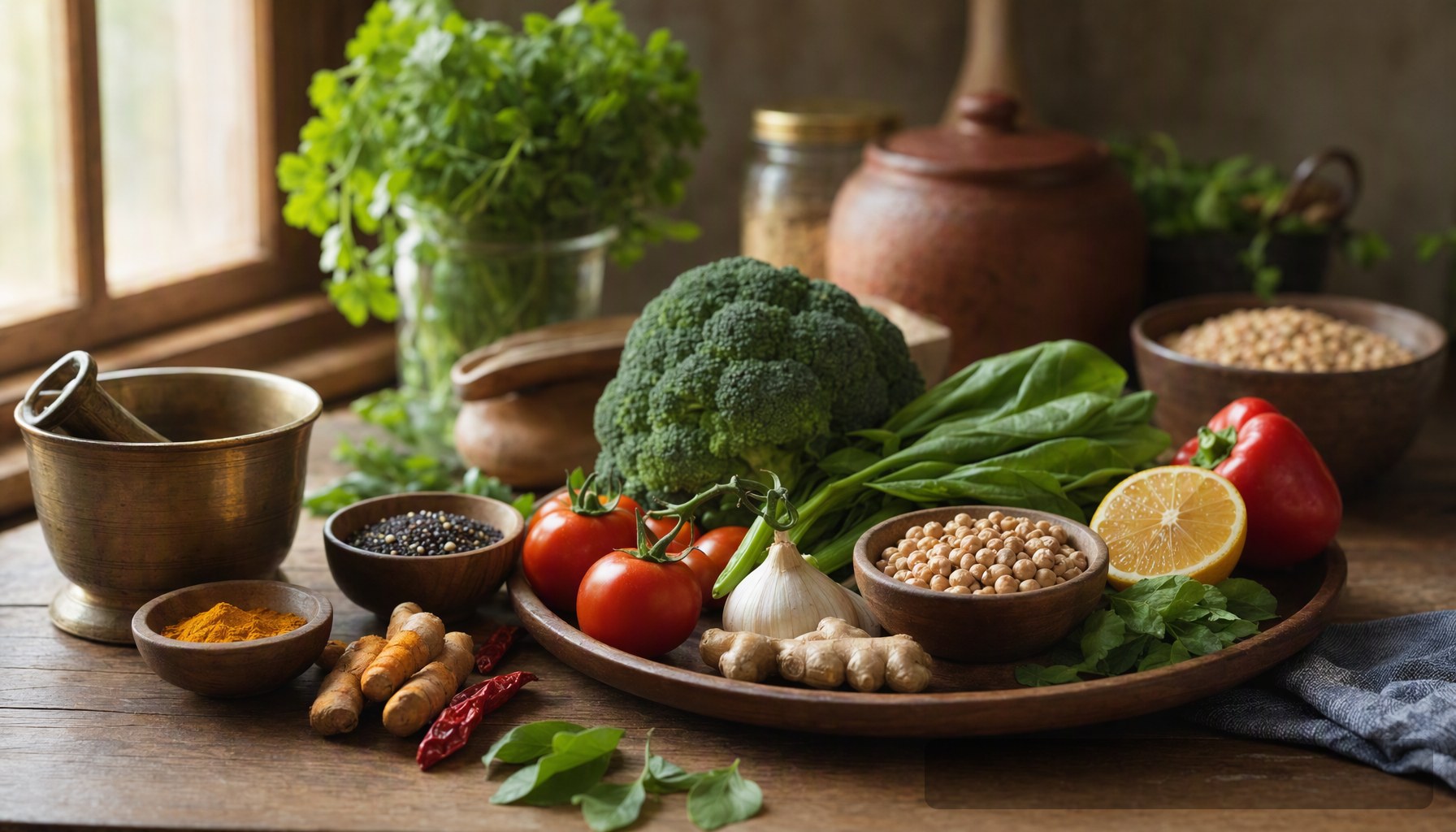
ICMR-NIN's 615-person Hyderabad study found RA patients eat more inflammatory, less diverse diets, with every unit rise in the Dietary Inflammatory Index linked to 17% higher RA odds.
A case-control study from the ICMR-National Institute of Nutrition (ICMR-NIN) in Hyderabad, published in October 2026 in the peer-reviewed journal Nutrients, found that adults with rheumatoid arthritis (RA) scored a median Dietary Inflammatory Index (DII) of 2.18, compared to 0.37 among healthy controls, a gap that translated into a 17% higher odds of RA for every one-unit increase in that score.
Rheumatoid arthritis is a long-term autoimmune disorder in which the immune system attacks healthy joint tissue, causing pain, swelling, and reduced mobility. While genetics and environmental exposures are known contributors, the relationship between dietary patterns and RA in Indian populations had not been studied at this scale. The ICMR-NIN team recruited 615 adults aged 18 to 55 from Hyderabad: 301 newly diagnosed RA patients and 314 healthy individuals. Participants completed a validated 131-item food frequency questionnaire, and researchers scored each person on three measures: the DII (inflammatory potential of the diet), the Dietary Diversity Score (DDS), and the Mean Probability of Adequacy (MPA) for micronutrients.
What the numbers show
The differences across all three measures were substantial. Only 50.2% of RA patients had a high dietary diversity score, against 74.2% of healthy participants. Micronutrient adequacy was even more striking: the median MPA for RA patients was 18.9%, compared to 32.9% for controls. In practical terms, the average RA patient in this study was meeting adequate intake levels for fewer than one in five tracked micronutrients.
The statistical associations ran in both directions. Higher dietary diversity was linked to a 27% reduction in the odds of RA for each one-unit increase in the DDS. Better micronutrient adequacy was associated with a 12% lower likelihood of RA for every 10-percentage-point improvement in MPA. These figures were adjusted for age, sex, and body mass index.
Study supervisor Devraj J. Parasannanavar noted that the findings point toward looking at overall dietary quality rather than chasing individual nutrients when studying chronic inflammatory conditions. ICMR-NIN Director Bharati Kulkarni called for long-term, intervention-based studies to determine whether improving diet can actually prevent or modify RA progression. The researchers were careful to state that this study does not prove poor diet causes RA. It is observational, meaning the association could run the other way: people in pain may eat less varied food because cooking and shopping are harder, not because their diet triggered the disease.
Why this matters for Indian diets
The DII was developed to score foods and nutrients on their capacity to shift inflammatory markers like C-reactive protein and interleukin-6. A positive DII score means the overall diet leans pro-inflammatory; a negative score means it leans anti-inflammatory. Common pro-inflammatory dietary patterns include high intake of refined carbohydrates, red and processed meat, and fried foods, while diets rich in vegetables, legumes, whole grains, omega-3 fatty acids, and spices like turmeric tend to score negatively on the DII.
For Indian urban diets, this is relevant. Refined wheat (maida), white rice, packaged snacks with added sugars, and seed oils high in omega-6 fatty acids are staples in many households. A diet built around these, with limited vegetables and pulses, would likely score high on the DII. The ICMR-NIN study does not name specific foods consumed by RA patients, so it is not possible to say which items drove the higher DII scores in this cohort. That detail would require the full published data in Nutrients, which is the appropriate place to look for the food-level breakdown.
The micronutrient adequacy gap is also worth taking seriously. An MPA of 18.9% means RA patients, on average, were meeting adequate intake thresholds for fewer than two in ten micronutrients assessed. Nutrients commonly low in Indian diets include vitamin D, vitamin B12 (especially in vegetarian and vegan populations), iron, zinc, and calcium. Several of these have documented roles in immune regulation. Whether correcting these deficiencies would change RA outcomes is exactly the kind of intervention trial Bharati Kulkarni is calling for.
What buyers and cooks should do
This study does not prescribe a specific diet for RA, and anyone managing the condition should work with a rheumatologist and a registered dietitian before making changes. That said, the findings are consistent with broader nutritional science on anti-inflammatory eating, and there are practical steps that align with what the data suggest.
Prioritize dietary diversity first. The 27% reduction in RA odds per unit increase in DDS is the strongest signal in the study. Eating a wider range of vegetables, fruits, legumes, nuts, seeds, and whole grains increases the probability of covering more micronutrients without needing supplements for every gap.
Check the ingredient list on packaged foods for refined starches, added sugars, and partially hydrogenated oils, all of which are associated with higher DII scores. Maltodextrin, for instance, is a partially hydrolyzed starch used as a filler or thickener in many Indian packaged snacks and health drinks; it has a high glycemic index and contributes to pro-inflammatory dietary patterns.
For vegetarians and vegans managing RA, vitamin B12 and omega-3 fatty acids (from flaxseed, chia, or algae-based sources) deserve specific attention, since plant-based diets can be low in both. FSSAI has not issued specific dietary guidelines for autoimmune conditions, so there is no regulatory framework to reference here beyond general food safety standards.
The ICMR-NIN study is the largest of its kind in an Indian RA population and gives researchers a baseline to build on. The next step, as the authors and the institute's director agree, is a controlled intervention trial that actually changes participants' diets and tracks what happens to inflammatory markers and disease activity over time. Until that evidence exists, the honest summary is: diet quality is associated with RA risk in this population, the direction of the association makes biological sense, and eating more diverse, less processed food is unlikely to cause harm while that evidence is gathered.
Sources
- NIN study finds strong link between diet quality and Rheumatoid Arthritis — The Hindu
- Nutrients — MDPI (journal where the ICMR-NIN study was published)
- ICMR-National Institute of Nutrition, Hyderabad — official site
- Dietary Inflammatory Index: development and validation — Carcinogenesis (Oxford Academic)