ICMR-NIN's 615-person Hyderabad study links pro-inflammatory, low-diversity diets to higher rheumatoid arthritis odds, with micronutrient adequacy also significantly lower in RA patients.
A case-control study by ICMR-National Institute of Nutrition (ICMR-NIN), Hyderabad, published in the peer-reviewed journal Nutrients in October 2026, found that adults with rheumatoid arthritis scored a median Dietary Inflammatory Index (DII) of 2.18, nearly six times the 0.37 recorded among healthy controls in the same city.
The study enrolled 615 adults between 18 and 55 years of age from Hyderabad: 301 newly diagnosed with rheumatoid arthritis (RA) and 314 healthy individuals serving as controls. Researchers at ICMR-NIN used a validated 131-item food frequency questionnaire to assess three diet-quality markers: the DII (which scores a diet's inflammatory potential), the Dietary Diversity Score (DDS), and the Mean Probability of Adequacy (MPA, a measure of micronutrient sufficiency). The study was published on 6 October 2026 and reported by The Hindu Telangana edition on 17 October 2026. It matters because dietary research in Indian RA populations has been sparse, and this is one of the first structured attempts to quantify the diet-disease association locally.
What the numbers show
Rheumatoid arthritis is a long-term autoimmune disorder in which the immune system attacks healthy joint tissue, causing pain, swelling, and reduced mobility. Genetic and environmental triggers are well-documented; the dietary angle in Indian adults has not been.
The ICMR-NIN data make the gap between RA patients and healthy adults concrete across all three markers.
On dietary diversity, only 50.2% of RA patients scored high on the DDS, against 74.2% of healthy participants. That is a 24-percentage-point gap, and it held after the researchers adjusted for age, sex, and body mass index.
On micronutrient adequacy, the median MPA for RA patients was 18.9%, compared with 32.9% for controls. A 14-percentage-point shortfall in the probability of meeting micronutrient requirements is not a marginal difference.
The dose-response relationships are where the study gets practically useful. Every one-unit increase in DII score was associated with a 17% rise in the odds of having RA. Every one-unit increase in dietary diversity was linked to a 27% reduction in those odds. Every 10-percentage-point improvement in micronutrient adequacy was associated with a 12% lower likelihood of RA.
Study supervisor Devraj J. Parasannanavar noted that the findings point toward overall dietary quality rather than any single nutrient as the relevant variable. ICMR-NIN Director Bharati Kulkarni called for long-term intervention studies to test whether dietary changes can prevent or modify RA progression. The researchers themselves are clear that this study does not prove poor diet causes RA; it shows a statistically significant association that warrants follow-up.
One limitation worth naming: case-control designs capture diet at one point in time, and newly diagnosed patients may have already changed their eating habits in response to symptoms. The direction of causality remains open.
What buyers and cooks should do
The DII is a scoring system that assigns positive values to pro-inflammatory dietary components (refined carbohydrates, saturated fat, trans fat, excess omega-6) and negative values to anti-inflammatory ones (omega-3 fatty acids, fibre, polyphenols, vitamins C, D, and E, zinc, magnesium). A diet that scores above zero is net pro-inflammatory by this measure. The RA group in this study averaged 2.18, well into positive territory.
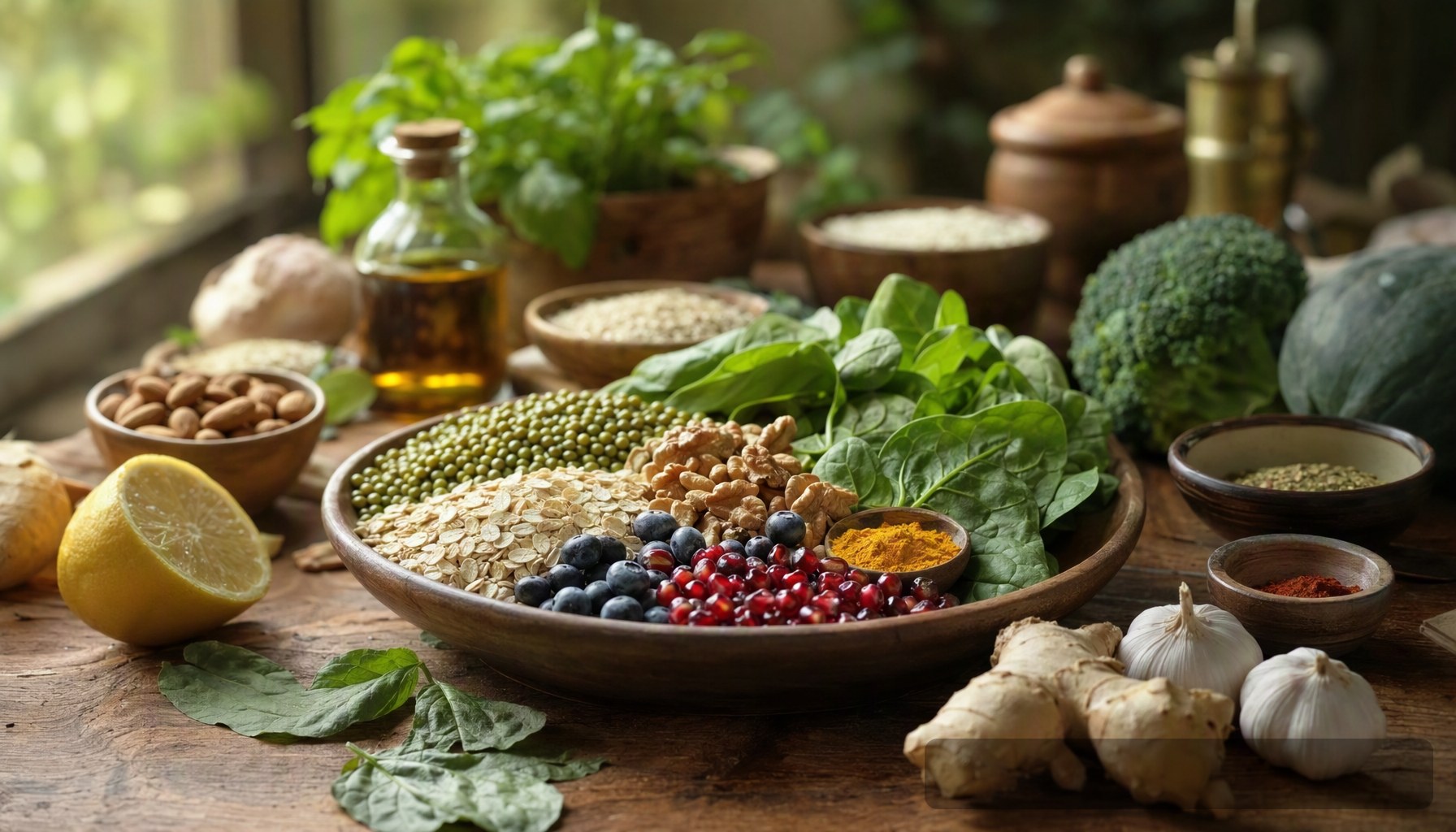
For Indian home cooks, the practical translation is straightforward. Diets built around white rice, maida-based products, and deep-fried snacks with little vegetable variety will score high on the DII and low on DDS and MPA. Diets that include a range of vegetables, legumes, whole grains, nuts, seeds, and oily fish (or flaxseed and walnuts for plant-based eaters) will score in the opposite direction.
A few specific moves worth considering:
- Replace refined grain staples with whole grain alternatives where possible: jowar, bajra, ragi, and brown rice all carry more fibre and micronutrients than polished white rice or maida.
- Increase vegetable variety rather than volume of a single vegetable. The DDS rewards breadth across food groups, not just quantity.
- Include omega-3 sources regularly. For non-vegetarians, small oily fish like sardines and mackerel are affordable and widely available in Hyderabad markets. For vegetarians and vegans, flaxseed (alsi), chia seeds, and walnuts are the practical options.
- Watch for ultra-processed snacks marketed with clean-label language. A product labelled "multigrain" or "baked not fried" can still carry refined starch, seed oils high in omega-6, and added sugar, all of which push the DII upward. Check the ingredient list, not the front-of-pack claim.
- Micronutrient adequacy in this study was low even among healthy controls (32.9% median MPA). That figure suggests widespread dietary gaps in the study population, not just among RA patients. Vitamin D, zinc, and magnesium are the nutrients most commonly under-consumed in urban Indian diets, and all three appear in the anti-inflammatory component of the DII.
For anyone already managing RA, dietary change is not a replacement for prescribed medication. The ICMR-NIN researchers are not claiming it is. What the data do support is treating food quality as a modifiable variable worth tracking alongside clinical markers, and that is a reasonable position for both patients and their care teams to take.
The full study is available in Nutrients. ICMR-NIN has not yet released a public dataset or a detailed food-group breakdown beyond what appeared in the press release, so the specific foods driving the DII difference in this cohort remain unpublished.
Sources
- NIN study finds strong link between diet quality and Rheumatoid Arthritis — The Hindu Telangana
- Nutrients — MDPI peer-reviewed journal (publisher of the ICMR-NIN study)
- ICMR-National Institute of Nutrition, Hyderabad — official site
- Dietary Inflammatory Index: development and validation — Nutrition Journal (Shivappa et al., 2014)