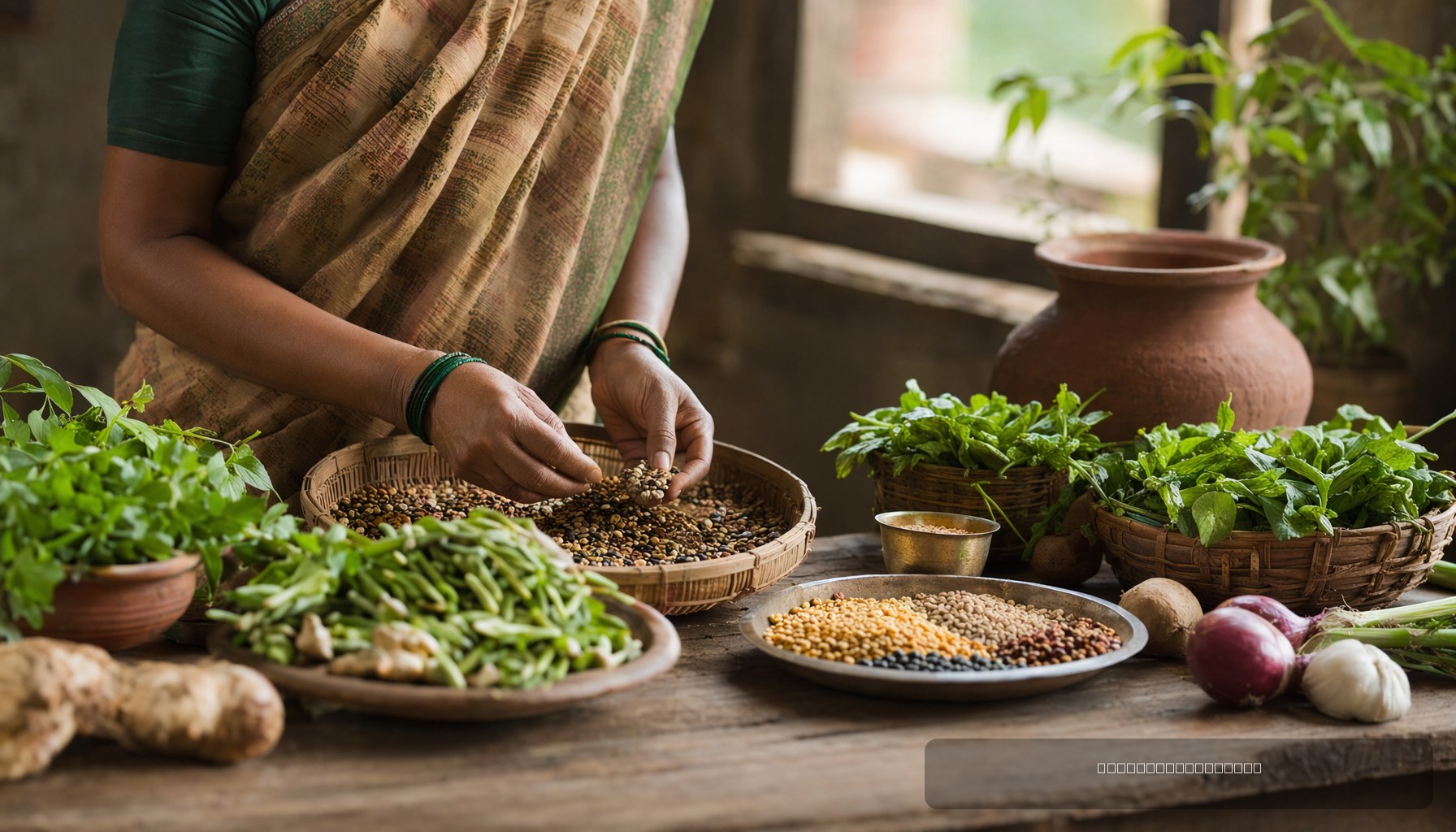
TRI's organic farming training in remote Madhya Pradesh helped one woman farmer go from subsistence to Rs 2 lakh annual income using jeevamrit, crop rotation, and poultry integration.
Transform Rural India (TRI), a not-for-profit organisation working in remote Madhya Pradesh, has been training women smallholder farmers in Mandla district in scientific organic cultivation methods since at least 2021, with documented income gains now crossing Rs 2 lakh per year for participating farmers.
The programme centres on Pipariya Maal village in Mandla district, where women from self-help groups (SHGs) are learning to move away from low-yield subsistence farming. TRI's model combines structured agronomic training with access to organic inputs, credit through village organisations, and secondary income streams like poultry. The goal is not just higher yields but reduced dependence on chemical inputs, which directly affects what eventually reaches local markets and, further down the chain, urban consumers buying "farm-fresh" or "naturally grown" produce.
What changed for these farmers
Muliya Kumhare's story is the clearest illustration of what TRI's training actually involves. Before the programme, she grew brinjal, chilli, and okra in small patches the way her family always had: no crop planning, no soil management, and no surplus to sell. Income was negligible.
After attending her first structured training session, Kumhare was introduced to three specific practices that form the backbone of TRI's organic method.
First, jeevamrit. Jeevamrit is a fully natural, fermented liquid fertiliser made from cow dung, cow urine, jaggery, pulse flour, and soil. It functions as both a soil activator and a microbial inoculant, improving soil biology without synthetic inputs. It has roots in natural farming systems promoted by agronomist Subhash Palekar and is increasingly cited in Indian agricultural extension programmes as a low-cost alternative to chemical fertilisers.
Second, machaan cultivation. A machaan is a traditional elevated platform or trellis structure used for climbing vegetables like bitter gourd, bottle gourd, and beans. TRI provided Kumhare with a machaan kit, which allowed her to grow vertically, improve air circulation around plants, and increase yield per square metre without expanding the land area.
Third, crop rotation and line sowing. These are standard agronomic practices, but they were new to Kumhare. Line sowing allows for better spacing, easier weeding, and more predictable yields. Crop rotation reduces pest pressure and soil depletion without chemical intervention.
The water access problem came next. Kumhare's farm had no reliable irrigation. She took a loan from her village organisation and dug a well, enabling year-round production rather than seasonal subsistence. This single infrastructure change let her sell surplus at the Pipariya Maal local market and the Bijadandi block market.
Poultry was added as a second income stream. TRI helped her set up a poultry unit that now runs 650 chicks and generates Rs 75,000 a year. The poultry manure feeds back into her vegetable fields as compost, reducing her input costs. This closed-loop design is what makes the system genuinely organic rather than organic-in-name-only: the farm's waste becomes its own fertility input.
Kumhare now cultivates 2.5 acres, earns over Rs 2 lakh annually, and is no longer financially dependent on her husband. Four other women in the village have started similar training after visiting her farm.
What buyers and cooks should know
For consumers who care about where their food comes from, this programme matters for a few practical reasons.
Produce grown through TRI's method arrives at local block markets without synthetic fertiliser residues. Jeevamrit, neem-based pest management, and cow dung compost are the inputs. There are no registered pesticides in this system. That does not automatically mean the produce carries any formal organic certification. India's organic certification framework under FSSAI and the National Programme for Organic Production (NPOP) requires a documented conversion period and third-party audit. TRI's statement does not mention whether Kumhare or other programme participants are pursuing NPOP certification. Buyers at Bijadandi block market or Pipariya Maal village market should ask directly.
For cooks and home buyers sourcing from rural producers or farm-to-table supply chains, the practical signal here is the input list: jeevamrit, neem, and poultry compost are all verifiable through a farm visit or a conversation with the grower. These inputs leave no synthetic residue and are consistent with clean-label sourcing standards.
For anyone interested in Ayurvedic or traditional food systems, jeevamrit is worth understanding. It is not a branded product. Any farmer can prepare it from locally available materials. The formula is documented in Palekar's natural farming literature and has been adopted by several state agricultural departments, including Andhra Pradesh's Rythu Sadhikara Samstha programme. Its use in Mandla district by TRI-trained farmers connects a remote tribal district to a broader national shift away from chemical-input dependency.
TRI's programme also points to a structural gap that affects clean food supply chains across India: the women doing the actual growing often have the least access to agronomic knowledge, credit, and markets. SHG membership gave Kumhare the credit access to dig her well. Village organisation membership gave her a peer network. The training gave her the technical knowledge. Remove any one of those three and the income gain probably does not happen.
What TRI has not yet published, at least in this report, is aggregate data: how many women across Mandla district are in the programme, what average income gains look like across the cohort, and whether any participants are pursuing formal organic certification. Those numbers would allow a cleaner assessment of whether this is a replicable model or a well-documented individual success story. The Hindu Business Line's report, published July 13, 2026, is based on a TRI statement rather than independent field verification.