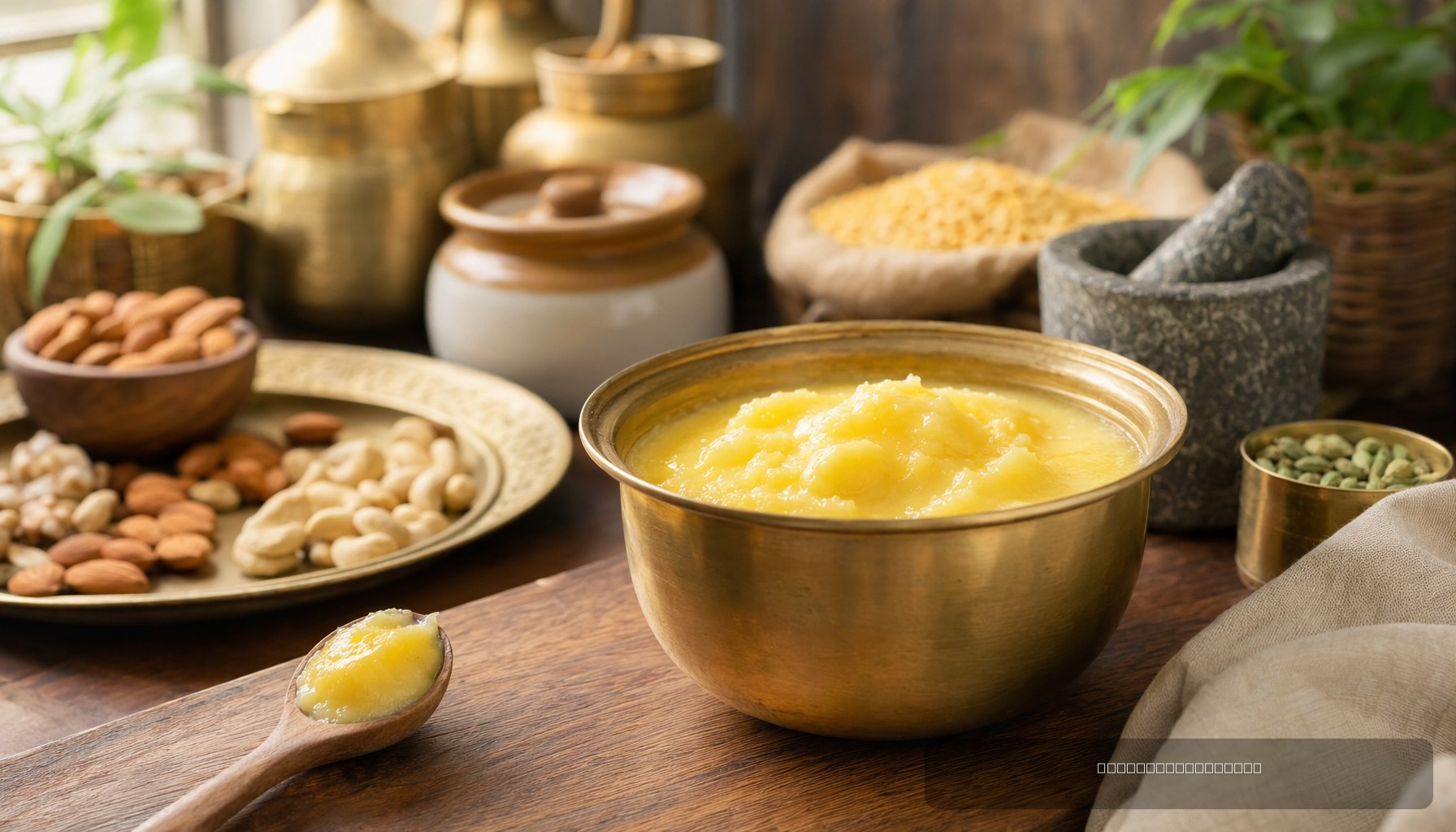
850 kg of ghee suspected of containing palm oil, vanaspati, and coconut oil was seized across Telangana on July 14-15, 2026, after inspections at 79 establishments.
The Telangana Food Safety Department seized 850 kg of ghee on suspicion of adulteration during a coordinated two-phase enforcement drive conducted on July 14 and 15, 2026, across the state. Under the Food Safety and Standards Regulations, pure ghee must contain at least 99.5% milk fat and no more than 0.5% moisture. Products falling short of that standard, or cut with vegetable fats, do not legally qualify as ghee.
The drive was carried out in coordination with the Hyderabad City Police. In the Core Urban Region (CURE), which covers Hyderabad and its immediate urban belt, officers inspected 14 establishments and collected 15 samples of ghee and cream for laboratory analysis. A further 60 kg of suspected contaminated product was discarded on the spot rather than held for testing. Across the rest of Telangana, Food Safety Officers inspected 65 establishments, collected 91 additional samples, and issued notices to five food business operators for suspected violations. The total across both phases: 79 establishments inspected, 106 samples collected, according to The Hindu's July 17 report.
Inspectors found that both licensed and unregulated establishments were suspected of selling ghee adulterated with palm oil, vanaspati, and coconut oil. None of those fats belong in ghee. Vanaspati is a partially hydrogenated vegetable fat that carries trans-fat risk. Palm oil and coconut oil are cheaper than milk fat and visually difficult to distinguish from pure ghee once blended, which is precisely why adulteration with these fats is commercially attractive and hard for consumers to detect at the point of purchase.
What changed
This drive is part of a broader enforcement push in Telangana that has been building through mid-2026. Earlier in July, the department seized 3,800 kg of cream worth Rs 9.22 lakh and suspended the licences of two dairy units. The state is also in discussions about merging the Food Safety and Drugs Control departments to consolidate enforcement capacity. Taken together, these actions suggest the department is running sustained category-specific sweeps rather than one-off raids.
The lab results from the 106 samples collected on July 14 and 15 have not been published yet. That matters because seizure on suspicion is not the same as confirmed adulteration. FSSAI's testing protocol for ghee typically involves checking the Reichert-Meissl value, Polenske value, and Baudouin test (for sesame oil), among other parameters. Results from accredited labs can take two to four weeks. Until those numbers are public, the 850 kg figure represents suspected adulteration, not proven adulteration. The department has not released the names of the establishments inspected or the operators who received notices.
What buyers and cooks should do
If you buy loose or unbranded ghee from a local dairy, sweet shop, or provision store in Hyderabad or elsewhere in Telangana, the current enforcement sweep is a direct signal to reassess that purchase. Loose ghee has no ingredient declaration, no batch traceability, and no label to cross-check. That is where adulteration is easiest to hide.
For packaged ghee, look for products that carry an FSSAI licence number and, ideally, a third-party quality certification. The FSSAI licence number on the pack does not guarantee purity, but it means the manufacturer is at least registered and traceable. Some brands voluntarily publish lab test certificates on their websites or packaging. That is worth checking.
At home, a rough field test: pure ghee solidifies uniformly at room temperature and has a grainy texture when cooled. Ghee adulterated with coconut oil may solidify differently depending on the ratio. Vanaspati adulteration can sometimes be detected by the Baudouin test using furfural and hydrochloric acid, but that is not a practical kitchen method. The more reliable route is to buy from suppliers who can show you documentation.
For Ayurvedic and Jain households where ghee is used as a ritual and dietary staple, the stakes of adulteration go beyond food safety. Vanaspati and palm oil are not acceptable substitutes in those contexts, and the adulteration would not be disclosed on any label because there is no label on loose product.
If you spot a suspicious product or want to report a vendor, the FSSAI consumer helpline is 1800-112-100. Complaints can also be filed through the FSSAI Food Safety Connect app. The Telangana Food Safety Department's social handle is @cfs_telangana on X, where the department has been posting updates from the current drive.
The lab results from this sweep will be the real story. If a significant proportion of the 106 samples come back positive for vegetable fat adulteration, it will confirm that the problem is systemic rather than isolated to a handful of bad actors. Watch for that data in the coming weeks.
Sources
- 850 kg of ghee seized on suspicion of adulteration during Telangana-wide food safety drive — The Hindu
- Telangana Food Safety Department seizes 3,800 kg of cream worth Rs 9.22 lakh, suspends licence of two dairy units — The Hindu
- Telangana plans merging Food Safety and Drugs Control departments to raise enforcement — The Hindu
- FSSAI Food Safety and Standards (Food Products Standards and Food Additives) Regulations — FOSCOS portal