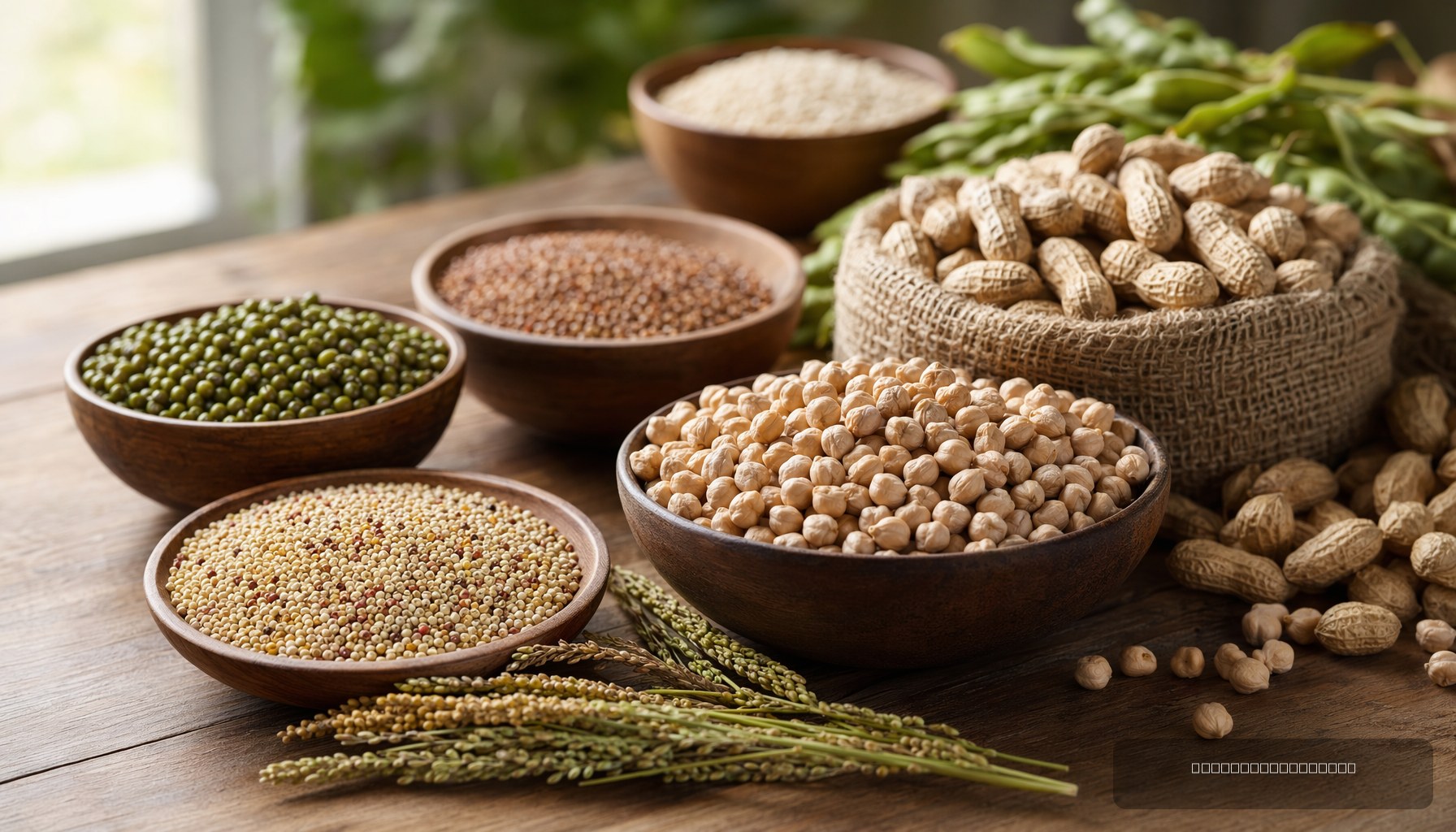
Telangana has procured 9.57 LT of maize at MSP and plans jowar buying; the state minister wants the Centre to double bengalgram and groundnut procurement limits from 25% to 50%.
Telangana's Agriculture Minister Tummala Nageswara Rao announced on May 16, 2026, that the state government has procured 9.57 lakh tonnes of maize so far this Rabi season at the Central government's minimum support price (MSP) of ₹2,400 per quintal — a procurement exercise backed by ₹4,000 crore in state funds — and has set aside an additional ₹1,100 crore to begin purchasing jowar (sorghum) from farmers.
The announcement came during a review meeting with Markfed and marketing department officials in Hyderabad, where the minister assessed storage capacity, gunny bag availability, and transportation logistics. The broader context: Telangana farmers have faced repeated losses from unseasonal rains, and the state government is pushing the Centre to expand price-support coverage to crops that currently receive limited or no MSP procurement protection.
What changed — and what the Centre is being asked to do
The current Central government policy caps MSP procurement of bengalgram (chana dal) and groundnut at 25% of a state's total produce. Minister Nageswara Rao is formally writing to the Union Agriculture Minister to raise that ceiling to at least 50%. For clean-label food buyers, this distinction matters: bengalgram is the base ingredient in besan (chickpea flour), chana dal, and a wide range of pulse-based snacks and flours that have surged in popularity as gluten-free and high-protein alternatives. Groundnut is the backbone of cold-pressed peanut oil, natural peanut butters, and chikki-style snacks. When farmers cannot sell these crops at MSP, they are more likely to sell to private aggregators at distressed prices — a dynamic that can compress quality standards and traceability across the supply chain.
Maize and jowar are not currently included in the Central government's Price Support Scheme (PSS), which is the mechanism that funds MSP procurement for oilseeds and pulses. The minister has demanded both crops be added. Jowar, in particular, is a crop with direct relevance to the clean-label segment: it is the grain behind jowar flour, a gluten-free millet increasingly used in rotis, bhakri, and commercial millet-blend products from brands like Slurrp Farm (Wholsum Foods) and others. The Centre has fixed the MSP for jowar at ₹3,699 per quintal for hybrid varieties and ₹3,749 per quintal for the 'maldandi' variety — but without PSS inclusion, state governments bear the full procurement cost.
On the ground, the scale of this season's Rabi crop is significant. Maize was cultivated across 16.37 lakh acres in Telangana, with estimated production of 43.49 lakh tonnes at an average yield of 26.57 quintals per acre. Jowar covered 4.03 lakh acres with an estimated 4.03 lakh tonnes of output. The state has so far procured roughly 22% of the maize crop — meaning the bulk of the harvest is still moving through markets.
What buyers and cooks should watch
For consumers who prioritise traceable, additive-free ingredients, state-level MSP procurement is one of the few structural levers that keeps smallholder-grown millets and pulses in the formal supply chain. When procurement is adequate, farmers have less incentive to sell to intermediaries who may blend, adulterate, or misrepresent grain quality. When it falls short — as the storage gap here illustrates (the state needs 15.07 lakh tonnes of godown space but has only 11.4 lakh tonnes available) — grain can sit in the open, increasing the risk of aflatoxin contamination in groundnuts and moisture damage in maize and jowar.
The gunny bag shortfall is also worth noting: against a requirement of 3 crore bags, only 2 crore have been arranged. Delays in bagging and storage directly affect grain quality at the point it enters the milling and processing pipeline.
For home cooks and small food businesses sourcing jowar flour, besan, or cold-pressed groundnut oil from Telangana-origin suppliers, the practical implication is to ask procurement questions now. Brands that source directly from farmer producer organisations (FPOs) or state-registered procurement centres are more likely to have documented lot traceability than those buying from spot markets where distress-sold grain accumulates.
FSSAI's quality standards for maize (IS 4483), jowar, and groundnut under the Food Safety and Standards (Food Products Standards and Food Additives) Regulations remain unchanged — but regulatory standards only apply at the point of processing and sale, not at the farm gate. The upstream procurement environment that this story describes is what shapes whether those standards are met in practice.
The Telangana government has not released a revised procurement schedule for jowar as of the date of this article. Whether the Centre responds to the minister's request on bengalgram and groundnut procurement limits — and on a timeline that covers the current Rabi season — remains to be seen.
Sources
- 9.57 LT maize procured in State so far; govt. plans to purchase jowar too — The Hindu, Telangana
- Price Support Scheme (PSS) — Department of Agriculture & Farmers Welfare, Government of India
- Minimum Support Prices for Kharif and Rabi Crops — Cabinet Committee on Economic Affairs, PIB
- Food Safety and Standards (Food Products Standards and Food Additives) Regulations — FSSAI