Telangana's irrigation minister told rice millers at a Hyderabad expo to adopt nutrient-retention milling, AI-based grain monitoring, and water-saving parboiling tech, with export incentives under review.
Telangana Irrigation and Civil Supplies Minister N. Uttam Kumar Reddy, speaking at the International Rice and Grains Tech Expo-2026 in Hyderabad on June 6, 2026, told the state's rice milling industry to move beyond conventional quality-based processing and invest in technologies that preserve the nutritional content of rice.
The minister addressed millers, private investors, and industry stakeholders at the expo, outlining what the state government wants from a sector that sits at the centre of Telangana's agricultural economy. Telangana currently produces nearly 300 lakh tonnes of paddy annually and accounts for roughly 60% of India's Rabi paddy procurement. The Congress government has transferred approximately Rs 39,000 crore to farmers in the current Kharif and Rabi procurement seasons alone, and over Rs 96,000 crore since taking office. The scale of that procurement makes the milling and storage infrastructure that follows it a direct food-quality concern for millions of consumers.
What changed at the policy level
The most concrete policy signal from the expo is that the Telangana government is examining a new incentive scheme for export-oriented rice mills. Both new mills set up specifically for exports and existing mills that convert their operations toward export markets would qualify for special incentives under the proposed framework. The full schedule of incentives has not been released yet, so millers and investors cannot plan around specific numbers at this stage.
Beyond exports, the minister's remarks pointed to three operational shifts the government wants to see.
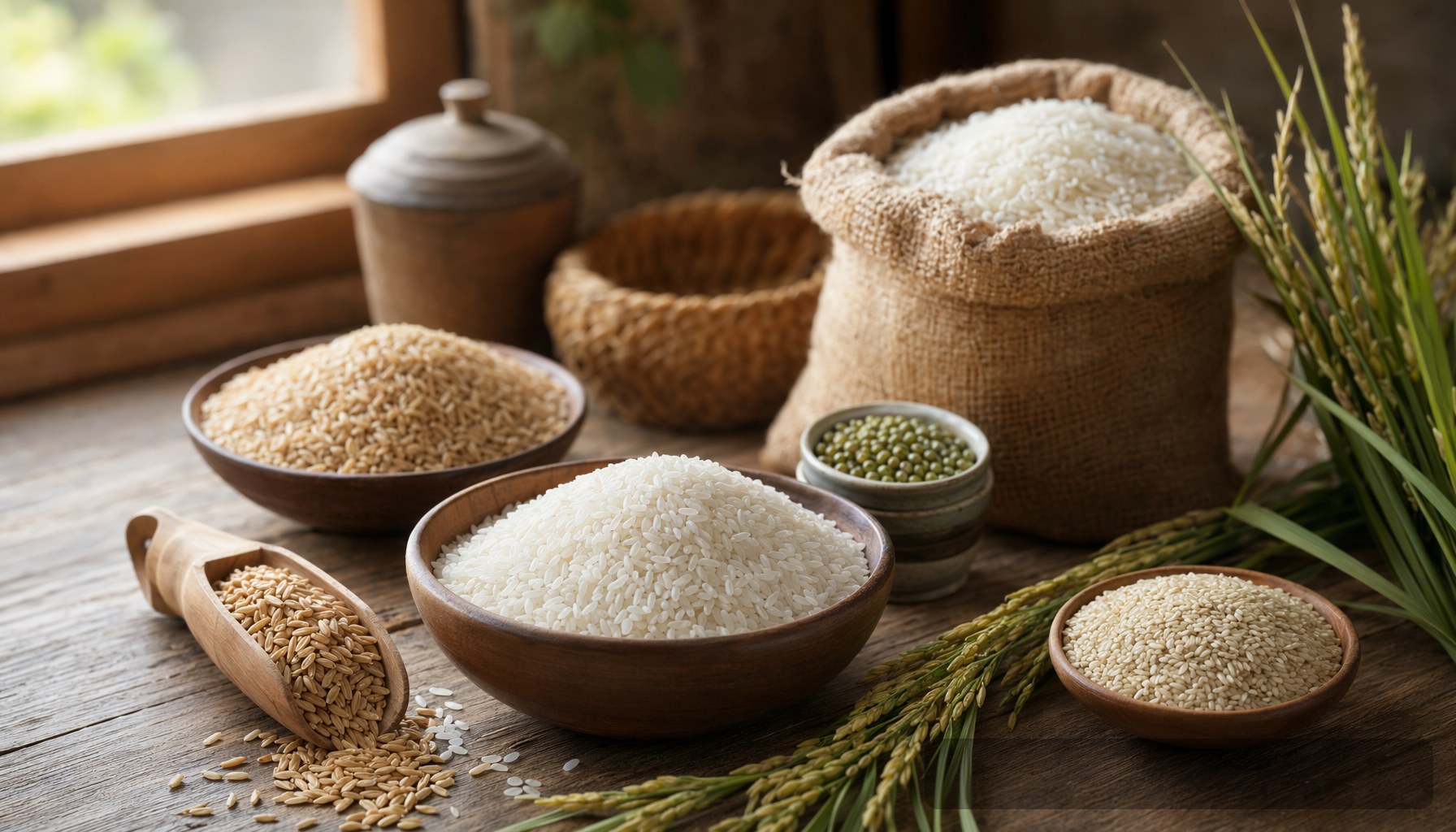
First, nutrition-oriented processing. Reddy specifically named controlled whitening, precision polishing, and nutrient-retention systems as technologies millers should adopt. This matters because conventional over-milling strips rice of its bran layer, removing B vitamins, minerals, and dietary fibre in the process. The degree of milling is one of the most consequential decisions in rice processing from a nutrition standpoint, and it is largely invisible to the consumer who buys a bag of white rice. Precision polishing systems allow millers to set tighter tolerances on how much of the outer layers are removed, theoretically producing rice that retains more of its natural micronutrient profile without the appearance penalty that makes brown rice a harder sell in Indian retail.
Second, AI-based grain monitoring and digital inventory management. The minister called for investment in steel silos, automated storage, and AI-based quality assessment to address the recurring losses and quality degradation that happen in conventional warehouse storage. Grain stored in gunny bags in open godowns is vulnerable to moisture, pests, and temperature fluctuations in ways that sealed silo systems are not. For consumers, poor storage translates to rice that has been treated with fumigants or that carries elevated mycotoxin loads by the time it reaches retail.
Third, water and energy efficiency in parboiling. Parboiling, the process of partially boiling paddy before milling, is water-intensive and is a major source of effluent discharge from rice mills. Reddy urged mills to reduce water consumption and recycle process water. This is partly an environmental compliance issue, but it also affects the parboiling process itself: cleaner, better-controlled parboiling produces more consistent gelatinisation of the starch, which affects the texture and digestibility of the final product.
The minister also flagged labour shortages as a structural problem for the industry during peak milling seasons and pushed for greater mechanisation and automation as the practical fix.
What buyers and home cooks should take from this
For consumers buying rice in Telangana or sourcing Telangana-origin rice elsewhere in India, the minister's remarks are a useful lens for reading product labels and asking better questions.
Nutrient-retention claims are not yet regulated under a specific FSSAI standard for milled rice. The Food Safety and Standards Authority of India's regulations on fortified rice (which involves adding iron, folic acid, and vitamin B12 back into milled rice as a separate intervention) are distinct from what Reddy described. Precision polishing and controlled whitening are milling process choices, not fortification, and there is currently no mandatory disclosure on retail rice packaging about the degree of milling applied. That means a brand claiming "nutritious" or "minimally processed" rice is making a marketing assertion, not a regulated one, until FSSAI introduces milling-degree labelling requirements.
If you want rice that has genuinely retained more of its bran and germ layers, the most reliable option remains hand-pounded or single-polish rice from small mills, or brown rice where the bran layer is intact by definition. Parboiled rice (sold as "sella" or "usna" in Indian retail) also retains more nutrients than raw-milled white rice because the parboiling process drives water-soluble vitamins from the bran into the endosperm before the bran is removed.
For buyers sourcing rice for restaurants or institutional kitchens in Hyderabad, the expo signals that some Telangana mills are moving toward better quality documentation and digital traceability. Asking suppliers for mill-level quality certificates and storage records is now a more reasonable ask than it was a few years ago, particularly for mills that are positioning for export markets where such documentation is a baseline requirement.
The proposed export incentive policy, once finalised, will also be worth watching. Export-grade processing standards tend to be stricter on pesticide residues, moisture content, and broken grain percentages than domestic market norms. Mills that upgrade to meet export specifications will, in principle, be producing cleaner rice for the domestic supply chain too.