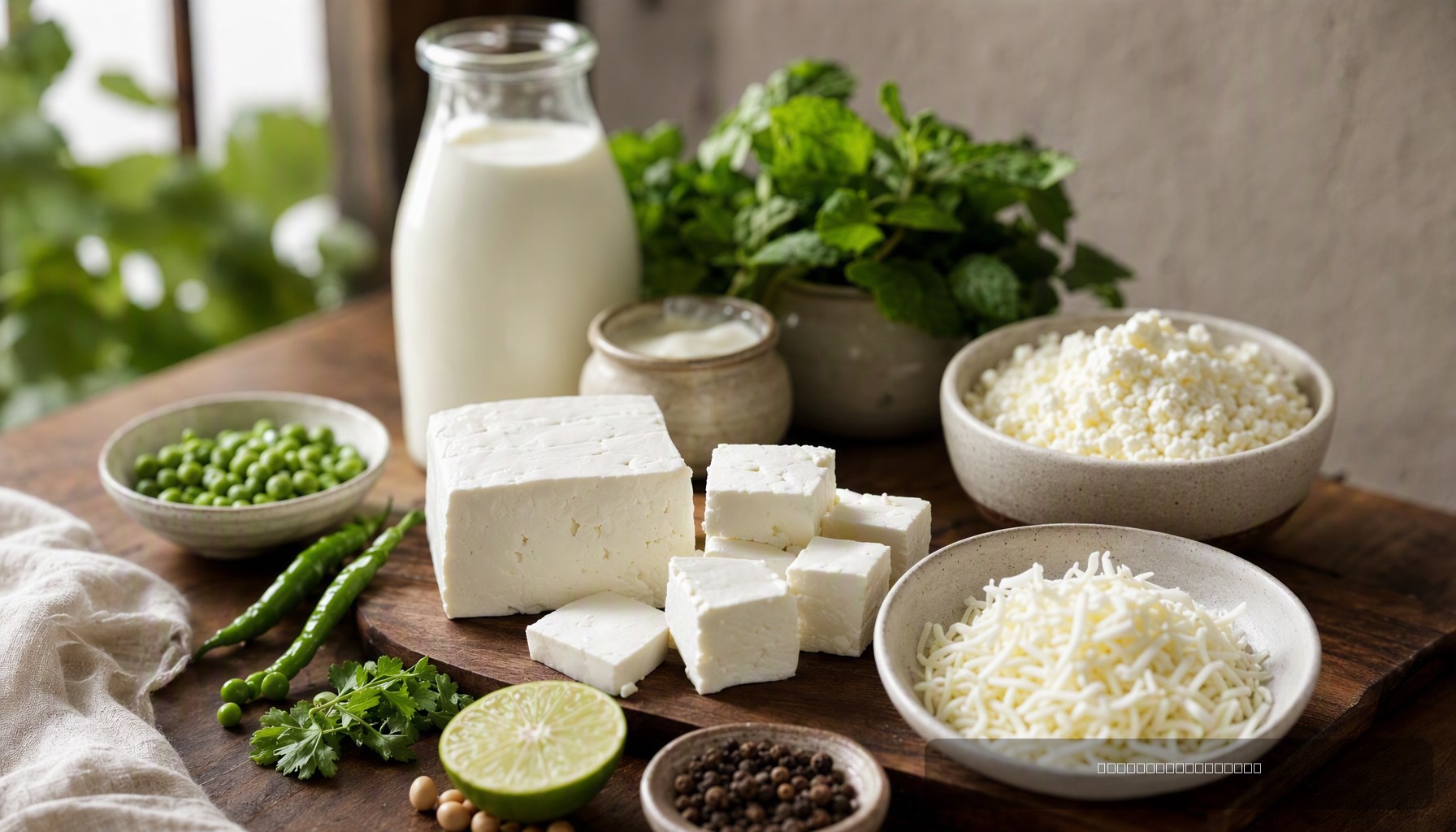
Zomato has banned analogue cheese and paneer from its platform with immediate effect, threatening to delist non-compliant restaurant partners following state and central food safety crackdowns.
Zomato (Eternal Limited, formerly Zomato Ltd) announced a zero-tolerance policy on analogue dairy products in August 2026, ordering restaurant partners to remove dishes containing analogue cheese, analogue paneer, or any other imitation dairy substitute from their menus or face delisting from the platform.
Analogue dairy is a category of food ingredients where milk fat or milk protein is partially or fully replaced by cheaper alternatives, typically vegetable oils such as palm oil or hydrogenated fats, while the product retains the appearance and texture of real dairy. Analogue cheese, for instance, can look and melt like mozzarella but contains no milk solids. Analogue paneer mimics the firmness of traditional chhena-based paneer without using cow or buffalo milk. These products are not inherently illegal under FSSAI regulations, but selling them without clear labelling as "analogue" violates FSSAI's Food Safety and Standards (Labelling and Display) Regulations, 2020, which require that any food product not conforming to a standard identity must be accurately named and described.
The Zomato announcement came on a Monday in late August 2026, directed at all merchant partners listed on the platform across India. The trigger was a reported state-wide crackdown by the Food and Drug Administration in Maharashtra and inspections by the Food Safety and Standards Authority of India (FSSAI) at five-star hotels in Delhi, where analogue dairy was allegedly being served without disclosure to consumers. Zomato said in its merchant communication that dishes already declared as containing analogue dairy had been turned off from the platform with immediate effect, and that remaining non-compliant listings would result in delisting of the restaurant.
What changed
Before this policy, Zomato's responsibility for ingredient accuracy largely rested with individual restaurant partners. A customer ordering a paneer tikka or a pizza had no reliable way to know whether the paneer or cheese on the dish was real dairy or a vegetable-fat substitute. The platform's new stance shifts that accountability: Zomato is now treating analogue dairy disclosure as a platform-level compliance requirement, not just a restaurant-level labelling obligation.
This matters for several overlapping reasons. First, consumers paying for paneer at restaurant prices have a reasonable expectation of receiving milk-based paneer, not a hydrogenated-fat block. Second, for vegetarians and Jain consumers who avoid certain plant oils or additives, analogue dairy products can contain ingredients that conflict with their dietary practice, and they would have no way to know without accurate labelling. Third, for people with dairy allergies or lactose intolerance, analogue dairy is not automatically safe: many formulations still contain casein (a milk protein) even when the fat is plant-derived, so the "no real dairy" assumption can be medically dangerous.
FSSAI's labelling regulations already require that analogue products be identified as such on packaging, but enforcement at the restaurant level has been inconsistent. Maharashtra's FDA crackdown and the Delhi hotel inspections suggest regulators are now treating this as a priority. Zomato's policy, if enforced, gives that regulatory intent a commercial consequence: non-disclosure costs a restaurant its Zomato listing.
It is worth noting what Zomato has not said. The company has not published a third-party audit mechanism or explained how it will verify that a restaurant claiming to use real dairy is actually doing so. The policy currently relies on self-declaration by restaurant partners, which is the same system that allowed undisclosed analogue dairy to proliferate in the first place. FSSAI has not released any corresponding platform-accountability framework that would require aggregators to conduct ingredient verification. Until such a mechanism exists, the policy is a strong signal but not a guarantee.
What buyers and cooks should do
If you order from Zomato, the safest immediate step is to ask the restaurant directly, before ordering, whether their paneer and cheese are dairy-based. Most restaurants will answer honestly when asked point-blank, and the question itself signals that customers are paying attention.
When buying packaged cheese or paneer from a retail store, check the front-of-pack name. FSSAI regulations require that a product called "analogue cheese" or "cheese analogue" must say so on the label. If a product says "pizza topping" or "processed cheese food" without specifying milk content, read the ingredient list. Ingredients like "edible vegetable oil", "modified starch", and "casein" appearing before any milk solids are a signal that the product is at least partially analogue.
For home cooks, making paneer from full-fat milk takes under 30 minutes and costs roughly the same as mid-range packaged paneer. Bring one litre of whole milk to a near-boil, add two tablespoons of lemon juice or vinegar, let the whey separate, strain through a muslin cloth, and press for 20 minutes. The result is 100% dairy, no additives, and no ambiguity.
Restaurant owners who currently use analogue dairy for cost reasons should treat Zomato's policy as a deadline, not a suggestion. The Maharashtra FDA crackdown and FSSAI's Delhi inspections indicate that regulatory enforcement is active. A demotion from Zomato's listings is a commercial problem; a food safety notice from FSSAI is a legal one. Transitioning to real dairy, or removing the affected items from the menu while the transition happens, is the only compliant path the platform has left open.
Zomato's move does not fix India's analogue dairy problem on its own. But it is the first time a major food aggregator has made undisclosed analogue dairy a delisting offence, and that changes the commercial calculus for every restaurant on the platform.